

5 Questions with Robert Hean: Train for Day One
 Maria Reisinger·2026-11-19·9 min read
About Robert
Robert Hean · Independent content creator and Atlassian Community Champion, Hean.Tech · Berkeley, California, USA
"I think back to what would have helped Rob on day one, and that's what drives me."
Robert has more than 15 years of experience in IT and business systems, including service desk, program management, and data and analytics. He has built compensation platforms from the ground up, designed HR databases and driven hard disks over state lines to complete projects on time. Today he shares what he knows through a newsletter, Udemy courses, his own learning platform, YouTube and free Atlassian Community Led Classes on topics such as Confluence with Rovo, forms in Jira and live certification prep. He also cohosts the podcast Asking for Trouble with Sajit Nair, and approaches every topic by asking what would have helped him earlier in his career.
Areas of expertise: Jira · Confluence · Rovo · Loom · IT Service Management · Program Management · Data and Analytics
Find Robert at hean.tech and on his YouTube channel, where he also lists his upcoming free classes.
Robert answered our five questions on video. Watch his answers here, or read the transcript below.
1. From Rovo agents for project managers to JQL and a full ACP-120 series, you teach free Atlassian Community Led Classes almost every month. What drives you, and which topics draw the most people right now?
What got me started is thinking back to when I started using Atlassian products: I was never trained. The story you'll hear me tell a lot is that I joined a company, asked what our knowledge base was, someone said Confluence and walked away, and that was my training. I learned by doing. That was great for Rob, very painful for many people. So I think back to what would have helped Rob on day one, and that's what drives me.
When I build content, I try to think through what most people are going to struggle with and where they have challenges, whether that's an end user, an admin or someone else. I try to find where the pain is and how I can help other people avoid some of it, by sharing what I know or by learning more about different topics so I can share that with them.
The topics I look for are the ones people are most interested in. Or, selfishly, sometimes I just pick something I want to teach, and hopefully people come join me.
2. With Sajit Nair you host "Asking for Trouble": "Two guys. Too many opinions. Not enough filters." Which discussion from the show surprised you the most?
I think the discussion that surprised me the most was talking to other admins about their confessions. What do you do that you know you shouldn't? It's the number of things where admins tell people "do as I say, not as I do".
It's all the bad habits: not renaming something properly, not using a good naming convention, leaving a bunch of draft pages in Confluence. All the stuff I tell people never to do, and then I turn around and catch myself doing it, like so many other people do.
Honestly, it was just good to hear them say they do it. It surprised me that other people have the same challenges I trip over.
3. Atlassian will bill Rovo credits, Automation steps and Assets by usage from December 3, and you've hosted sessions for org admins on this change this fall. What should admins pay attention to as the new model settles in?
As we all know, we're moving to usage based pricing on December 3. Rovo credits, Automation steps, Assets, Bitbucket and Customer Service Management AI answers are all going to be billed differently. I've had a number of sessions on this, including a live one at Team Europe, on managing Rovo specifically and keeping an eye on it.
Admins really need to pay attention to usage patterns in their organization right now. How is your team using these tools? They've had access to them for a while, so start to understand your organization's baseline. Then you can make informed decisions, or give good guidance to the people who will make the buying decisions or the compliance decisions.
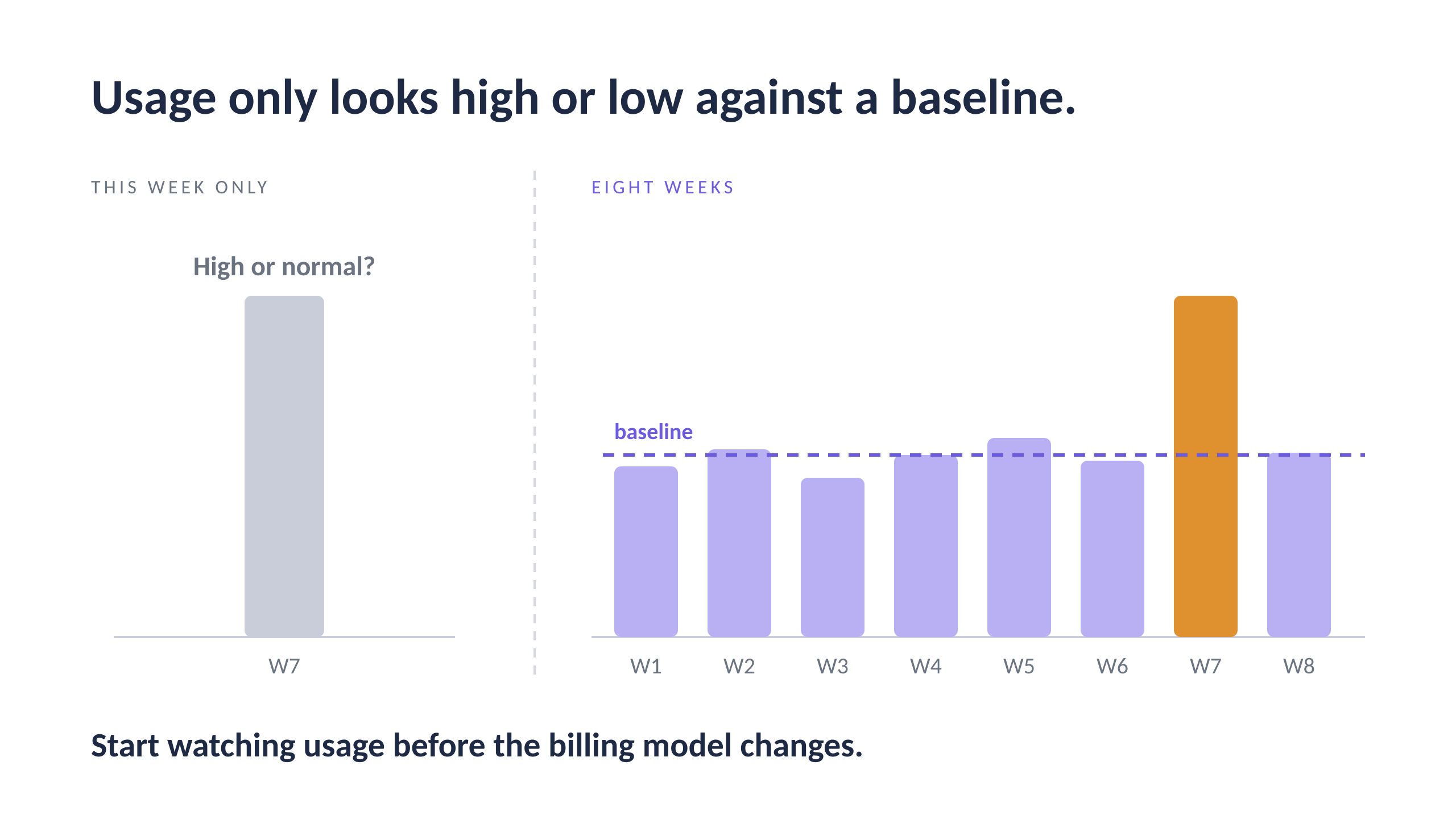
Illustration, not product data.
Our job as admins is to bring knowledge, technical understanding and insight into the system, and then it's usually up to other people to decide what happens. So we really need to pay attention to the Insights tab in our admin panel, talk to users about what they find useful or not, and provide that information to the people who will decide.
4. In your ACP-120 series, you prepare admins for Jira Cloud. When an auditor later asks "Who changed this, when, and why?", how well can a typical Jira site answer that today, and what should admins set up from day one?
As admins this can be challenging. We make changes, and auditors may come later and ask why this was done. There's an audit log in Atlassian across almost every layer of the stack, at the app level and at the work level. It really only tells you what changed. It might tell you who did it, but it doesn't tell you why. It's more the what, the when and the who, and the why behind it is usually really important for audit.
So in my experience, the best thing to do is to have a Jira space called something like IT changes. It could be JSM, it could be Jira Software, whatever you use. Set up a form, make sure you document every change you make, and make sure you have whatever approval is necessary.
I worked at large organizations that went public in the United States. They had to comply with Sarbanes Oxley, SOX, and that required us to put very strict approvals in place on when things were changed in various systems. I couldn't move the ticket forward, I couldn't do my job, until the appropriate person approved it.
You don't have to go quite that extreme, but have at least some paper trail. Hopefully not an email, hopefully not on a whiteboard, but in Jira, with a ticket you can reference back to and say: yes, on this date we made this change, it was approved by this manager, and here is the policy we were following. That will save you a lot of headaches trying to understand what happened.
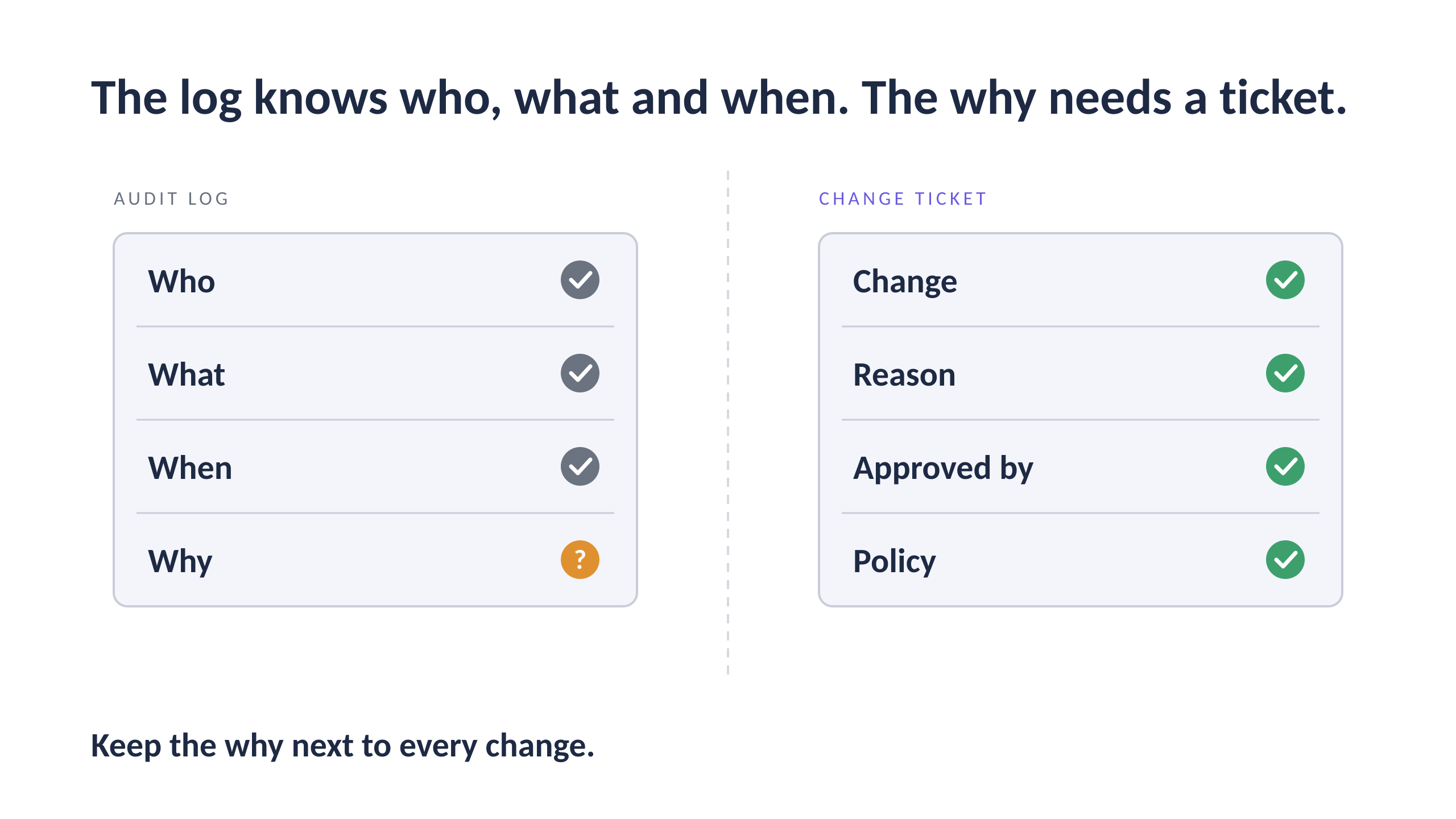
Illustration, not product data.
5. You share your knowledge in many ways: live, in videos and in your newsletter. What would you recommend to someone who wants to start, and what helped you most when you began?
I've spent the past 18 months doing independent content creation, and it's been great for me. I've been creating content longer than that, probably four or five years, between LinkedIn and other things. Now I've got a lot going on: a newsletter, Udemy courses, my learning platform, YouTube and in person sessions.
There are a lot of ways to get into this. If you want to share how you use Jira, best practices or tips, start small and start with the people near you. Maybe start in your organization, in your team's Slack channel, with a tip of the week. I'm happy to help with that and suggest ideas. Just get into the habit of regularly sharing your Jira knowledge, whether that's how your organization uses it, general best practice or something else. Start building that little muscle, or maybe the giant muscle, of sharing what you know. We all have something we can teach someone.
It can be hard to find that someone, so just put it out there. I became an Atlassian Creator, now called Atlassian Champions, because I was sharing a tip of the month on LinkedIn, I think, and someone at Atlassian noticed and asked if I wanted to do this. It doesn't have to start big. I was able to quit my job because I have a lot of this going on. That may not work for many people, and that's totally okay. Still share what you know, internally, on LinkedIn, or on one of the many online platforms where you can just start an account. It doesn't have to be big or overly complex. Just get started and see where it goes.
I started out with a single Udemy course that made, I think, $12 in its first month. Five or six years later, that's now what I get to do, which is pretty crazy. But it didn't start with everything you see here. It started with my laptop and an idea of how to run a course. So identify the thing in Jira you want to share, find a place to share it, and start sharing. Eventually people will notice, and you can build on it.
Five lessons from Robert Hean
-
Train people the way you wish you had been trained. Ask what would have helped you on day one, and pass exactly that on to your users.
-
Every admin has confessions. Naming conventions and forgotten drafts catch even the admins who warn others about them.
-
Know your baseline before usage based billing starts. Watch usage patterns and the Insights tab now, and hand that knowledge to the people who decide.
-
Keep the why next to the change. The audit log knows who, what and when. The why belongs in a change ticket with approval and policy.
-
Share one tip a week inside your team. Start in your team's Slack channel, the way Rob started with a tip of the month on LinkedIn.
Thank You
Our sincere thanks to Robert Hean for answering on video and for sharing his own admin confessions so openly. His advice to record the why of every change in a Jira ticket, with approval and the policy behind it, is one many readers will take straight back to their own Jira.
We truly appreciate your time and your openness.
About this series
5 Questions in the Atlassian Universe is an interview series by MetaFrazo featuring experienced practitioners from across the Atlassian ecosystem.
Each conversation explores practical lessons and real challenges from people who build, run and grow work in the Atlassian ecosystem.
Because the best ideas don't come from tools alone. They come from the people who use them every day.
About MetaFrazo
MetaFrazo turns the events of your Jira Cloud site into operational, governance and compliance analytics. See what changed. See who changed it. Without building a report.
www.metafrazo.cloud · Available on the Atlassian Marketplace
See you in the next edition of 5 Questions in the Atlassian Universe.
Interview conducted on video, October 2026. Transcribed and lightly edited for reading.
Rate this post
Related articles
5-questions-in-the-atlassian-universe-with-rishabh-jhawar
Rishabh Jhawar of Beyond Key on asking why before you build, moving procurement out of Excel and what an audit trail needs to explain later.
2026-11-12
5 Questions with Rolf Eriksen: Jira App Security
Rolf Eriksen of Eriksen Labs on why Jira automation can show a person as the author and what to ask any Marketplace app before you install it.
2026-10-28
Closed in Jira with no time logged: finding the reason
Why are Jira work items closed with no time logged? Combine the Jira event history with the team's resource plan to find the reason.
2026-11-17