
5 Questions in the Atlassian Universe with Kevin Behrens
 Maria Reisinger·2026-08-13·5 min read
About Kevin
Kevin Behrens · Lead Architect – Enterprise Strategy & Planning, catworkx
Kevin Behrens is Lead Architect for Enterprise Strategy & Planning at catworkx. With more than ten years in the Atlassian ecosystem, he helps enterprise organizations connect strategy, architecture, and execution through modern ways of working. His focus is on cloud transformation, enterprise strategy, agile delivery, and aligning business goals with operational outcomes.
Areas of expertise: Enterprise Strategy · Enterprise Architecture · Atlassian Cloud Transformation · Agile Transformation · Strategy Execution · Business & IT Alignment
1. What usually determines whether cloud migration becomes a long-term success?
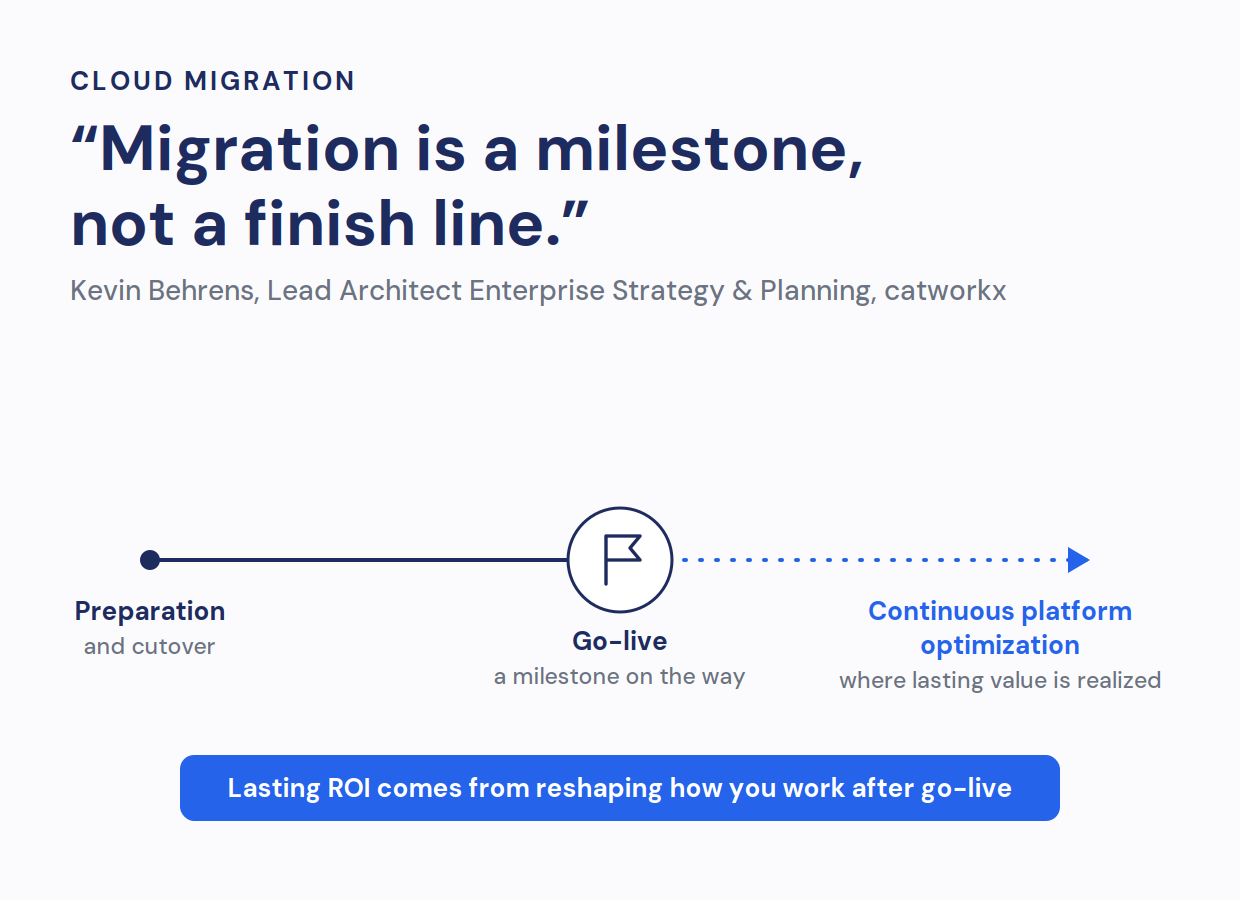
Long-term success is rarely determined by technical cutover metrics; it hinges on whether leadership treats the migration as an architectural redesign of their ways of working rather than an infrastructure refresh.
The pivot happens when we stop counting migrated instances or objects and start mapping how strategic intent flows down to daily execution.
In practice, I've seen this crystallize during architecture workshops where product, engineering, and operations leaders realized their roadmap, sprint planning, and customer feedback loops were operating in parallel and disconnected silos.
"Migration is a milestone, not a finish line."
We redesigned the workspace to cascade goals directly into resource allocation, delivery pipelines, and outcome tracking, while enabling AI-native data flows that surface signal-driven insights across teams.
Success is then measured by cross-functional dependency resolution, reduced manual handoffs, and the ability to trace how strategic initiatives translate into measurable business outcomes.
2. What typically happens after go-live that organizations tend to underestimate?
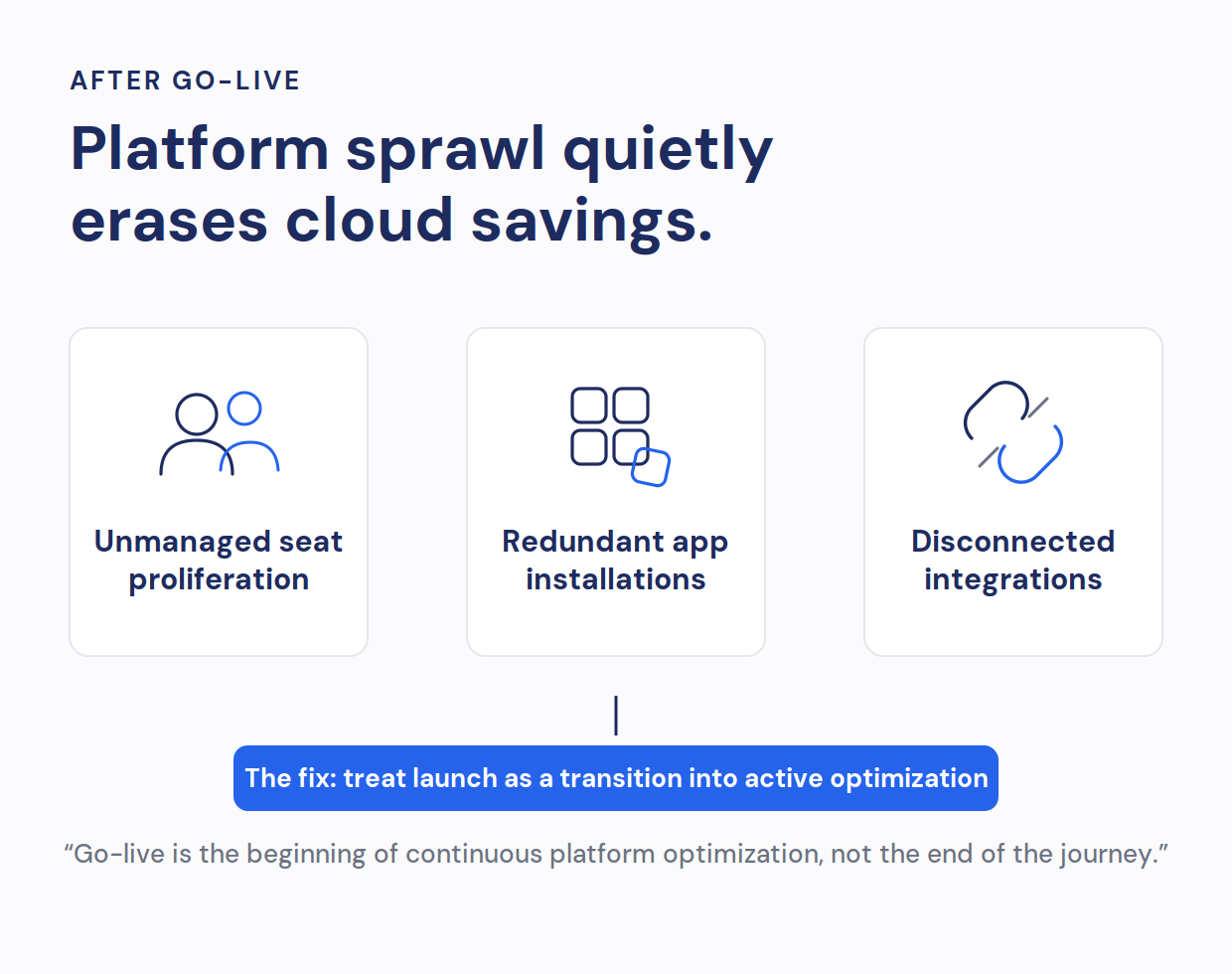
Platform Sprawl — The most underestimated reality post-go-live is the financial and operational friction caused by platform sprawl. While infrastructure management costs drop significantly, unmanaged seat proliferation, redundant app installations, and disconnected integrations quickly erase those savings.
Endpoint Thinking — Organizations fall short because they treat launch as an endpoint rather than a transition into active platform optimization. We close this gap by redesigning their ways of working and how work and goals flow through the enterprise to maximize outcome and value.
A Real Example — One enterprise discovered that some of their tooling was dormant because teams were still operating with legacy ticketing conventions. By aligning platform utilization with actual workflow demand and retiring unused capabilities, they turned a cost liability into justified spend through faster decision cycles and end-to-end visibility across strategy, work, and outcomes.
The Lesson — Go-live is the beginning of continuous platform optimization, not the end of the journey. The organizations that invest in actively reshaping their operating model after migration are the ones that realize lasting return on their cloud investment.
3. What challenges came up most often in the Cologne roundtable conversations?
The most striking insight wasn't technical debt — it was the sudden realization among business leaders that they had been severely underutilizing their platform's strategic leverage.
One IT director initially approached the conversation focused on compliance boundaries and endpoint security, but after mapping how integrated AI search, automated workflow routing, and cross-workspace analytics could connect stakeholder intake directly to delivery results, their perspective shifted entirely.
The turning point came when we tied platform capabilities to a concrete business metric like "time-to-value" or "cross-team alignment speed." That conversation transformed the migration from an IT compliance exercise into a deliberate capability enablement and expansion initiative, proving that modern platforms can serve as the connective tissue between human and non-human assets, strategy, and execution.
4. When an auditor asks "who changed this, when, and why," where do typical enterprise environments fall short?
The gap rarely lies in tooling availability; it's that governance is typically treated as a post-migration compliance checklist rather than woven into the architectural fabric of delivery. Auditors commonly encounter fragmented logs, manual approval chains, and disconnected identity sources that make tracing changes across interconnected systems slow and error-prone.
We address this by implementing a strict governance process. Every change needs to be fully assessed and understood, tied to a specific business justification, and automatically impact-analyzed across all linked resources and outcomes.
This keeps the underlying system of work stable under stress while maintaining continuous delivery velocity and satisfying compliance without bottlenecking teams.
5. What capabilities or trends in the Atlassian ecosystem will have the biggest impact over the next few years?
The immediate ROI will come from AI-augmented workflow pilots in product operations and engineering support, where features like Rovo-integrated search, automated summarization, and routine task routing cut context-switching and accelerate decision cycles.
However, the transformative gap lies between today's reactive tooling and tomorrow's predictive decision layers. Enterprises need to move toward agent-native workflows that continuously ingest internal dynamics (capacity shifts, scope changes, delivery bottlenecks) alongside external signals (market requirements, stakeholder priorities) to auto-recommend strategy and resourcing adjustments.
The highest-impact pilot target is cross-functional planning workflows: teams that currently rely on static roadmaps will gain the most by testing AI-driven recommendation engines that dynamically align goals, assets, and execution paths in real time.
Five lessons from Kevin Behrens
-
Cloud migration creates long-term value only when organizations redesign the way they work, not just the technology they use.
-
Go-live is the beginning of continuous platform optimization, not the end of the journey.
-
The greatest opportunity lies in connecting strategy directly with execution across the enterprise.
-
Governance delivers the most value when it is embedded into architecture and delivery from the beginning.
-
The next generation of enterprise organizations will use AI to continuously align goals, people, capacity, and execution.
Thank You
Our sincere thanks to Kevin Behrens for sharing his experience and strategic perspective on enterprise cloud transformation, governance, and the future of the Atlassian ecosystem.
Thank you for taking the time to contribute to this interview series and for sharing insights from your work with enterprise organizations.
About this series
5 Questions in the Atlassian Universe is an interview series by MetaFrazo featuring experienced practitioners from across the Atlassian ecosystem.
Each conversation explores practical lessons, real challenges and proven approaches to managing Atlassian products at scale.
Because the best ideas don't come from tools alone. They come from the people who use them every day.
About MetaFrazo
MetaFrazo helps organizations understand what is changing, what matters and where operational risks are emerging inside Jira.
By transforming Jira metadata into operational intelligence, teams gain the visibility needed to improve governance, reduce configuration drift and make better decisions without exporting sensitive business data.
www.metafrazo.cloud · Available on the Atlassian Marketplace
See you in the next edition of 5 Questions in the Atlassian Universe.
Rate this post
Related articles
Why Jira Governance Fails Long Before Anyone Notices
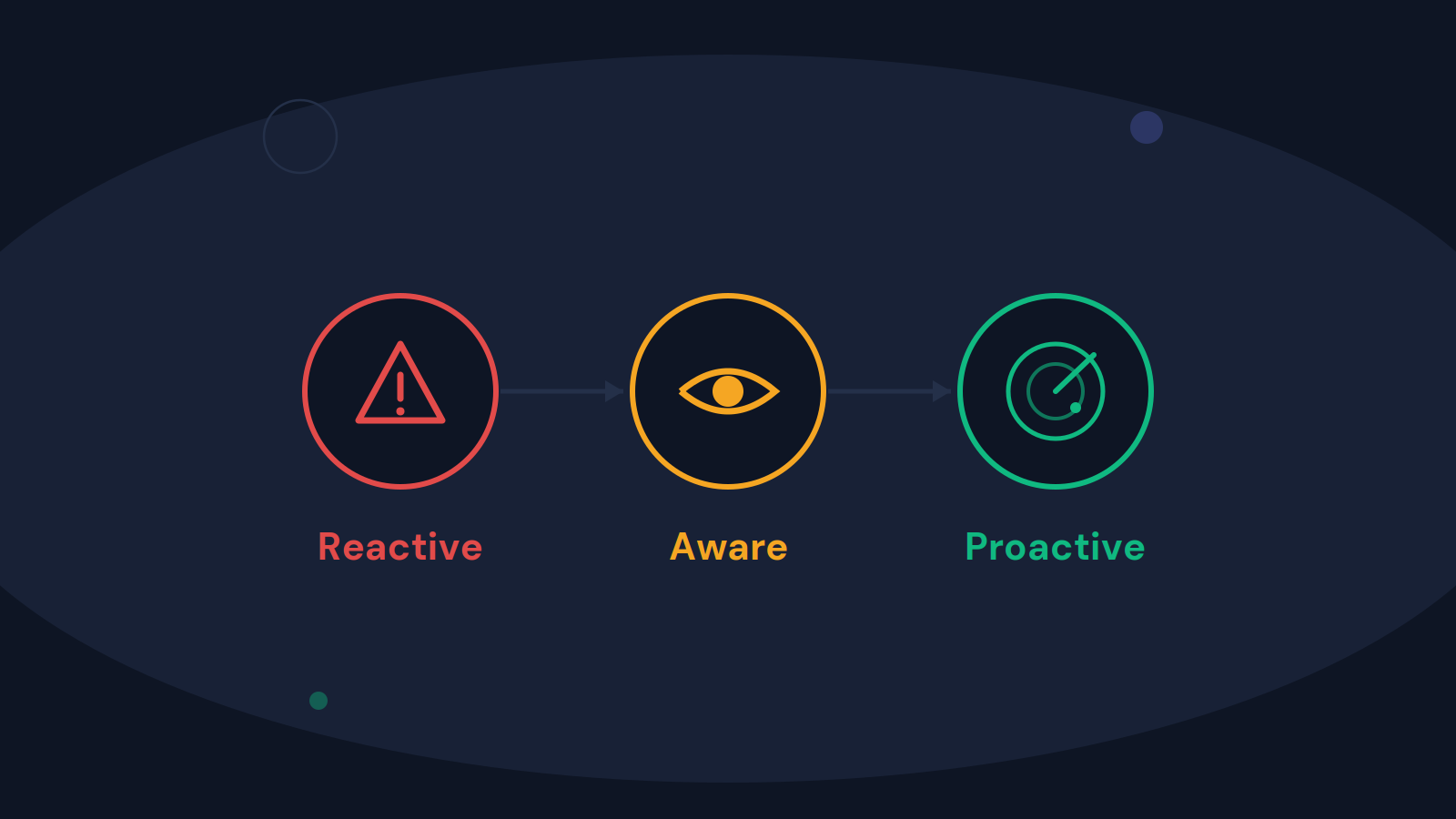
One team calls it "Done." Another "Closed." A third "Resolved." Each choice is perfectly reasonable. But ask across 200 projects how much work is actually complete — and suddenly there's no reliable answer. That's not a Jira problem. It's a visibility problem. In my latest article I argue that enterprise Jira governance rarely fails because of bad rules. It fails quietly — through hundreds of well-intentioned decisions that slowly drift apart until no one can see the whole picture anymore. The shift that matters isn't stricter policies. It's moving from "What changed today?" to "What has been changing over the past six months?" — from reacting to symptoms to spotting drift before it breaks something. I break it into three stages every Jira team can locate itself in: reactive → aware → proactive.
2026-08-03
5 Questions with Marie-Kathrin Organiszak (Uelzener)
Marie-Kathrin Organiszak, Product Owner Jira at Uelzener, on moving an insurer to the cloud, keeping Jira consistent across teams and tracing changes.
2026-10-08
NIS2 in Europe: One Directive, Many National Routes to Proof
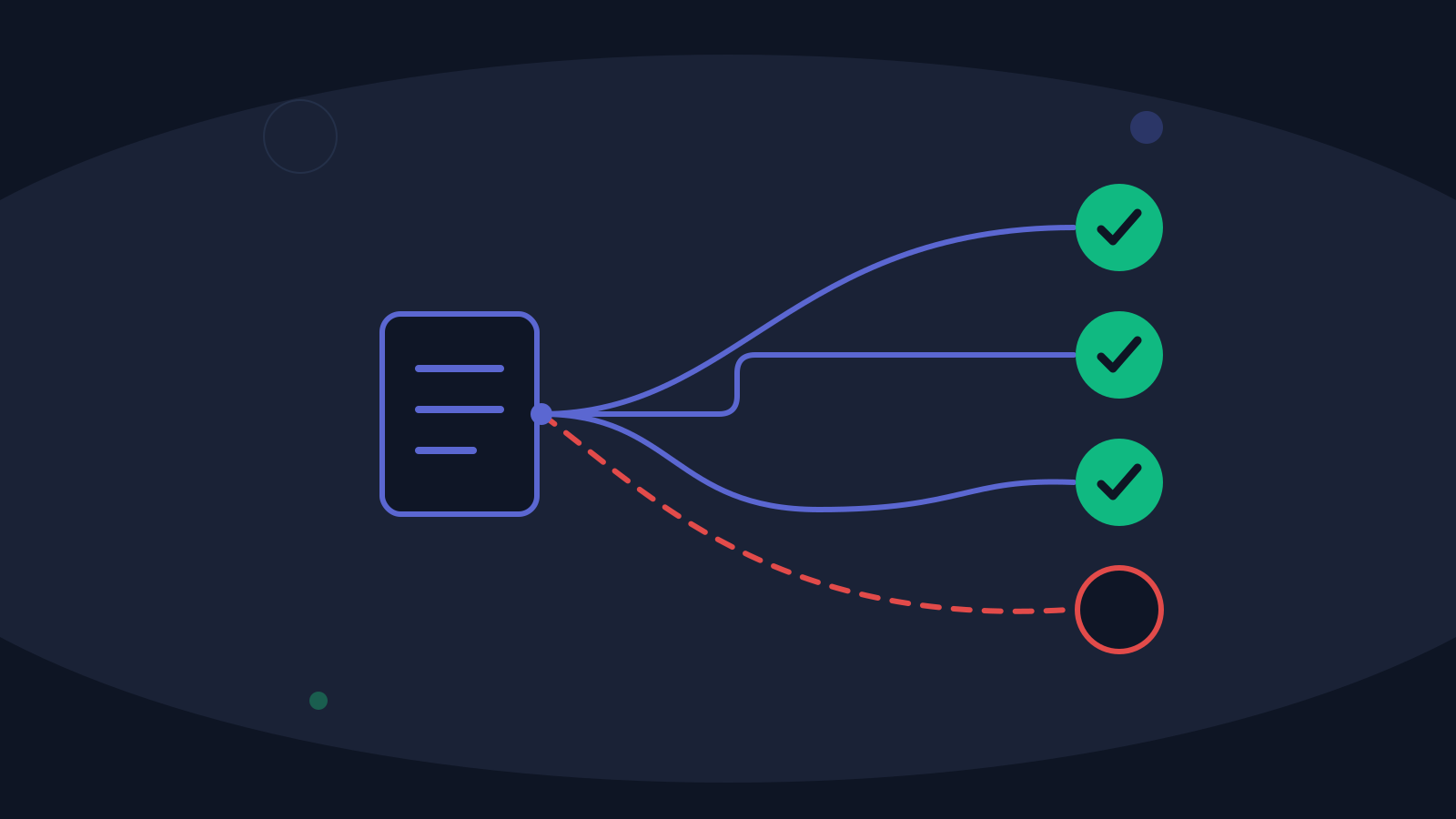
NIS2 sets one EU framework, but each member state decides how compliance is proven. Greece, Germany, Austria, Spain, Belgium and Ireland compared.
2026-10-06