

Atlassian Analytics and Jira Governance: Who Owns the Query?
 Maria Reisinger·2026-09-28·4 min read
The data is there. Who writes the query?
The question usually arrives by email, often shortly before an audit: who changed the permissions in the payment approvals area last quarter, and when?
Everyone knows the answer is somewhere in the system. Someone has to find it. And that can still take days.
Governance in Jira rarely fails for lack of data. It fails because nobody owns the query.
This article looks at what Atlassian Analytics offers here, who it is built for, and where MetaFrazo adds to it.
Jira forgets nothing, and still the question falls between three chairs
Jira records almost everything: every status change, every field update, every adjustment to workflows and permissions. In the interface, Jira shows that history per work item. It does not bring it together across many spaces and several months.
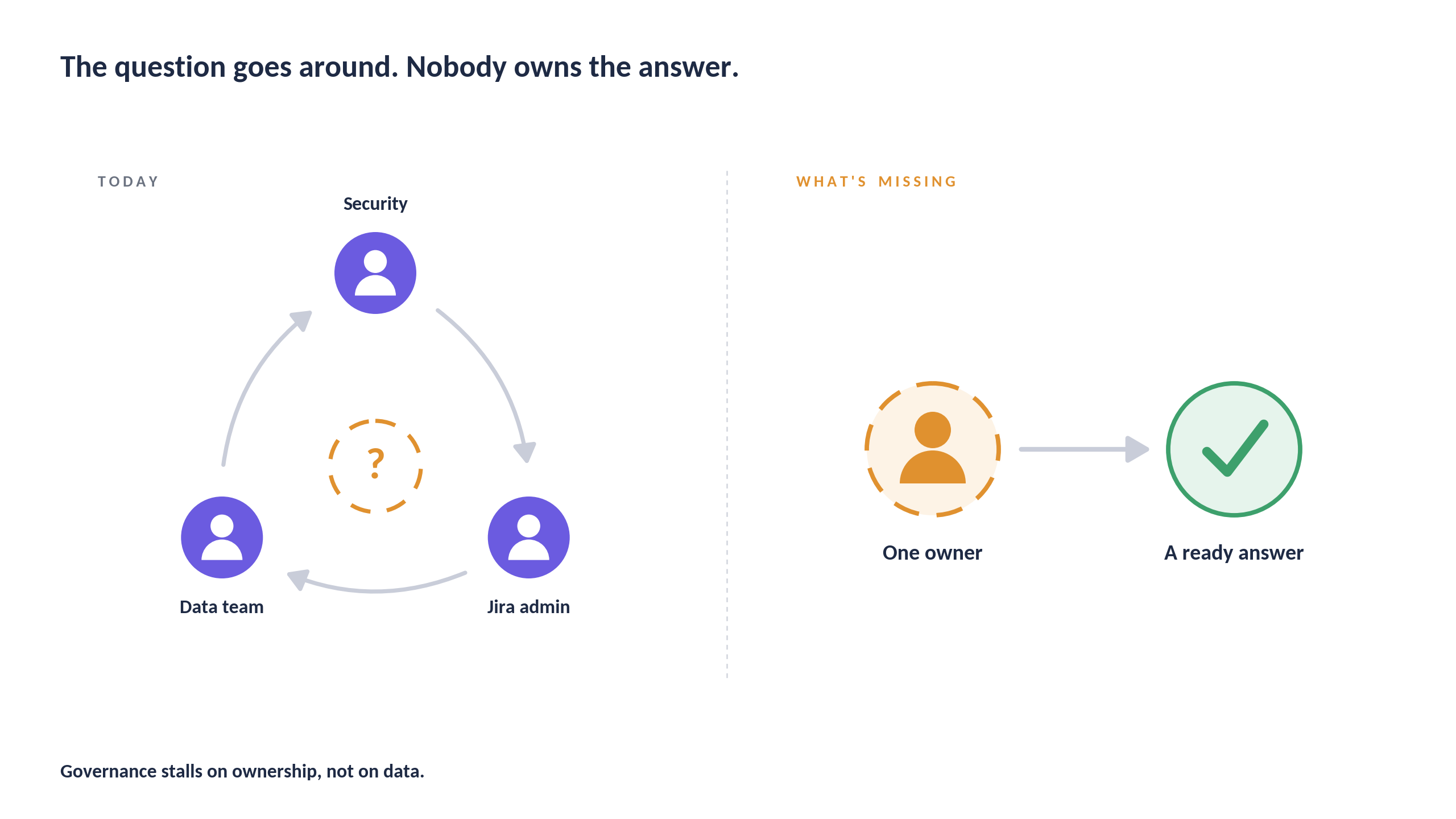
The real obstacle is organizational. The Jira admin has the access. The security team has the question. Someone else may have the skills to query the data. A governance question sits exactly between these roles. And it shifts a little with every audit: the dashboard someone built last year rarely answers the question the auditor asks this time.
Illustration, not product data.
A made-up team, a familiar week
Bank Musterhafen and its team do not exist. Names, numbers and events are invented to make the situation concrete.
Bank Musterhafen has 400 employees and runs Jira Cloud on the Premium plan. On a Monday, the auditor sends a short email: which workflows and permissions have changed since the start of the year, by whom, and when?
Aylin leads information security. The question lands with her, but she has no access to Jira. She forwards the email to Tobias, the Jira admin. Tobias knows where to look: the audit log, the history of individual work items, his own notes on changes. The pieces just don't fit together on their own. The data team could help, but they are busy closing the quarter.
By Thursday there is a spreadsheet with 63 rows. Tobias is fairly sure it is complete. Aylin sends it to the auditor with one sentence of explanation and makes a note to start earlier next time.
Nobody did anything wrong. The question simply had no owner.
Atlassian Analytics makes this data queryable
For customers on the Cloud Enterprise plan, Atlassian offers another way to work with that data: Atlassian Analytics, built on the Atlassian Data Lake. According to Atlassian's documentation, as of September 2026, it offers:
-
Deep Jira data: work item change history including the initial field value, status history, worklogs, sprints, users and workflow definitions
-
Several products in one place: Jira, Jira Service Management, Confluence and other Atlassian products in one schema
-
Three ways to query: visual mode, SQL, or natural language through Rovo
-
More than 50 templates, including flow metrics, sprint comparisons, SLAs and service management
-
External sources such as Snowflake, BigQuery or Databricks can be connected
Analytics fits organizations on the Enterprise plan that want to explore their data freely and have people who can turn questions into queries.
Any query tool, however capable, leaves one decision to the organization: which governance questions matter, and who answers them each time they come back.
Jira audit questions that come back every year don't need a new query
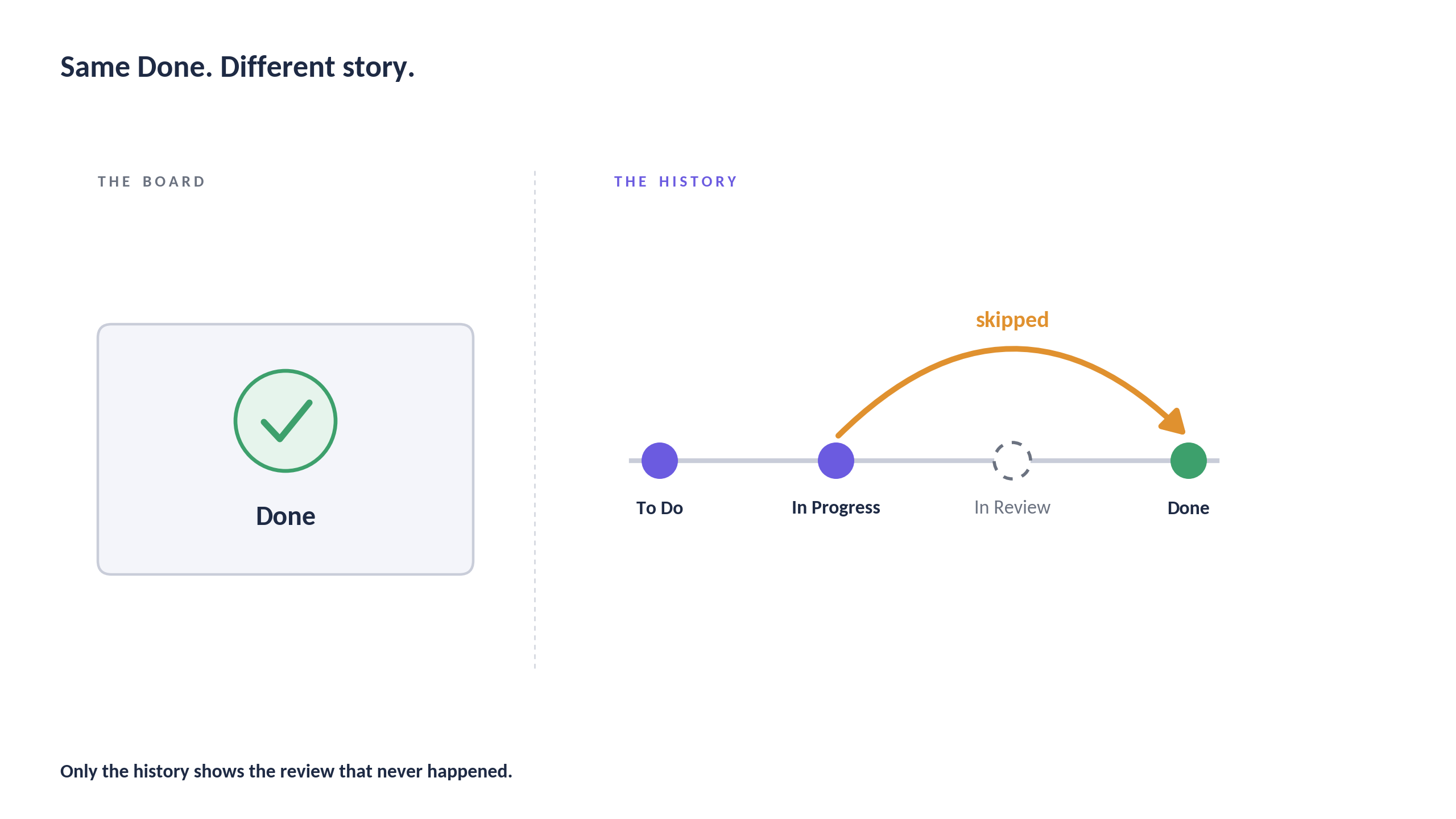
This is where MetaFrazo comes in. Not for every possible question, but for the ones that return in governance and audit again and again: who changed what, which work items skipped intermediate steps, and where permissions and configuration drift over time.
Three effects matter most:
-
The answer is ready before anyone asks. Governance and audit views are already built, so nobody has to write a query first.
-
Security and audit teams can work directly with the views. There is no detour through the data team.
-
It works without an Enterprise plan. Teams on Jira Cloud get this view whatever plan they are on.
Teams already using Atlassian Analytics keep it for exploring their own questions. MetaFrazo covers the recurring governance questions. Analytics starts with the question you bring. MetaFrazo starts with the questions that keep coming back.
Illustration, not product data.
What MetaFrazo can't do belongs at the start of every conversation
MetaFrazo records from the day it is installed. It does not see what happened before, and it does not reconstruct it. If you need a complete history for your next audit, install today, not two weeks before the date.
MetaFrazo works with Jira Cloud only. The connector runs on Atlassian's Forge platform. Events are stored and processed by MetaFrazo in the EU.
Before the next audit, ask a simpler question: who owns the answer?
-
Who owns recurring Jira governance questions in your organization? Name a person, not a department.
-
How long does it take today to establish who changed workflows or permissions last quarter? Measure it once, before the auditor asks.
-
Which questions do you want to query yourself, and which ones should already have an answer?
The data is already there. What matters is what happens before someone has to ask for it.
Sources, as of September 2026: Atlassian Analytics, Atlassian Data Lake, Schema for Jira, Add Atlassian Analytics to an existing site
Rate this post
Related articles
How to Detect Workflow Bypass in Jira
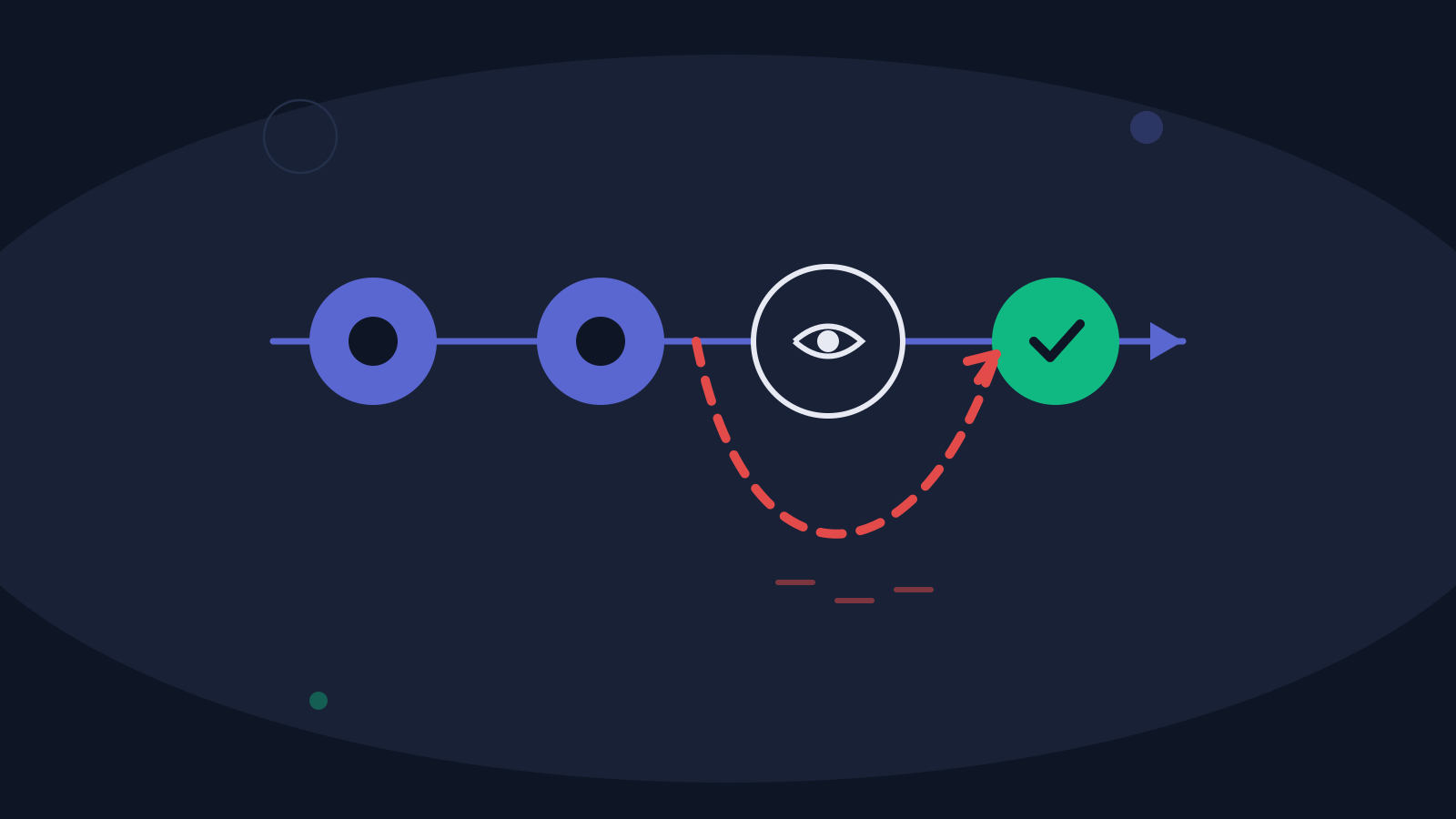
Skipped reviews look exactly like speed on a velocity dashboard. How the Bypass Risk Score turns workflow events into one number per project.
2026-08-14
The color decides, not the number
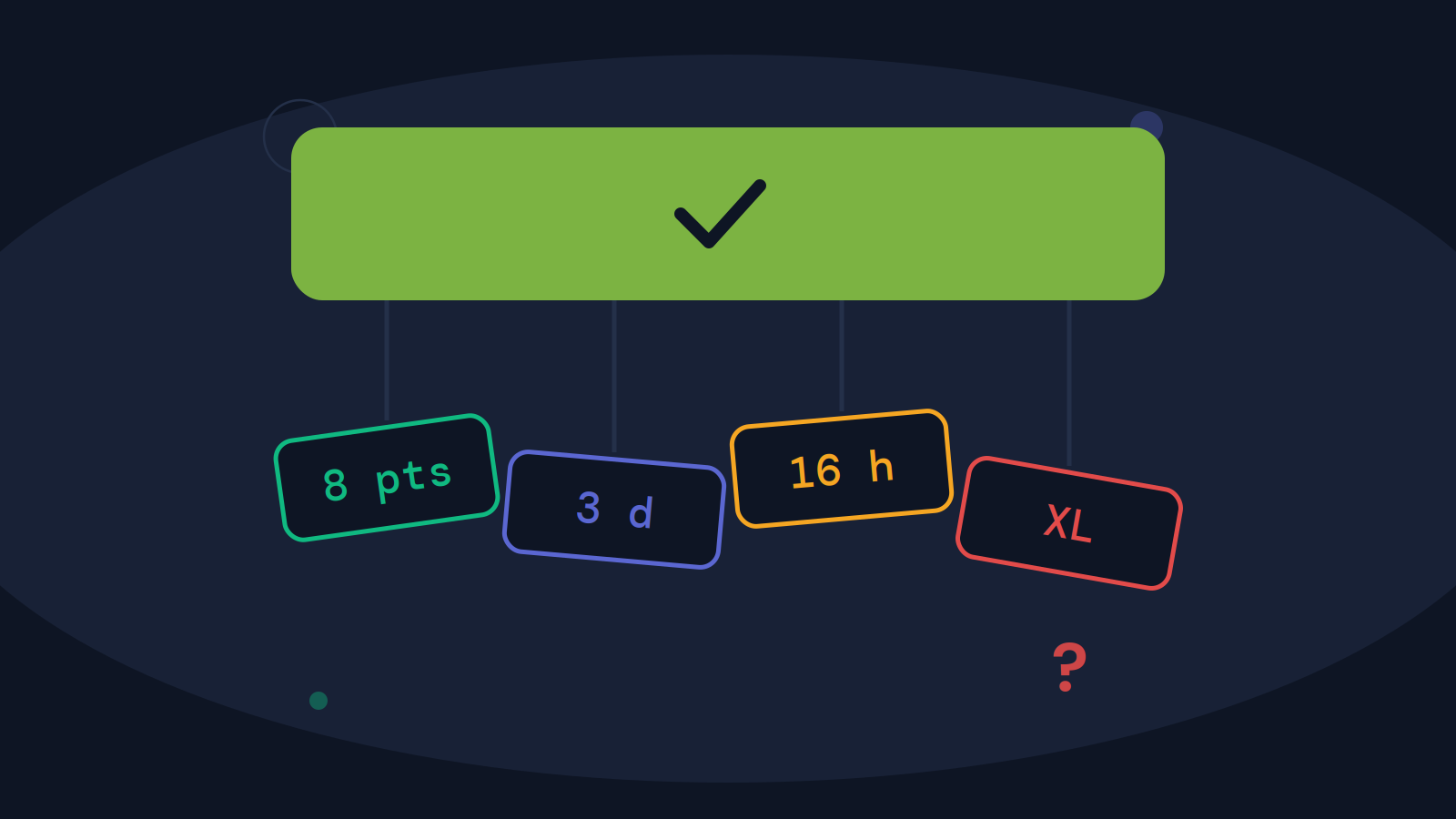
Four teams estimate in four different units, and one dashboard turns them into a single colour. When the bar is green, nobody asks what the number underneath actually means. The gap this opens up only matters when someone asks what a decision was based on. And that is where the configuration and the event history start to disagree.
2026-08-17
Cleanup is an event. Drift is a condition.
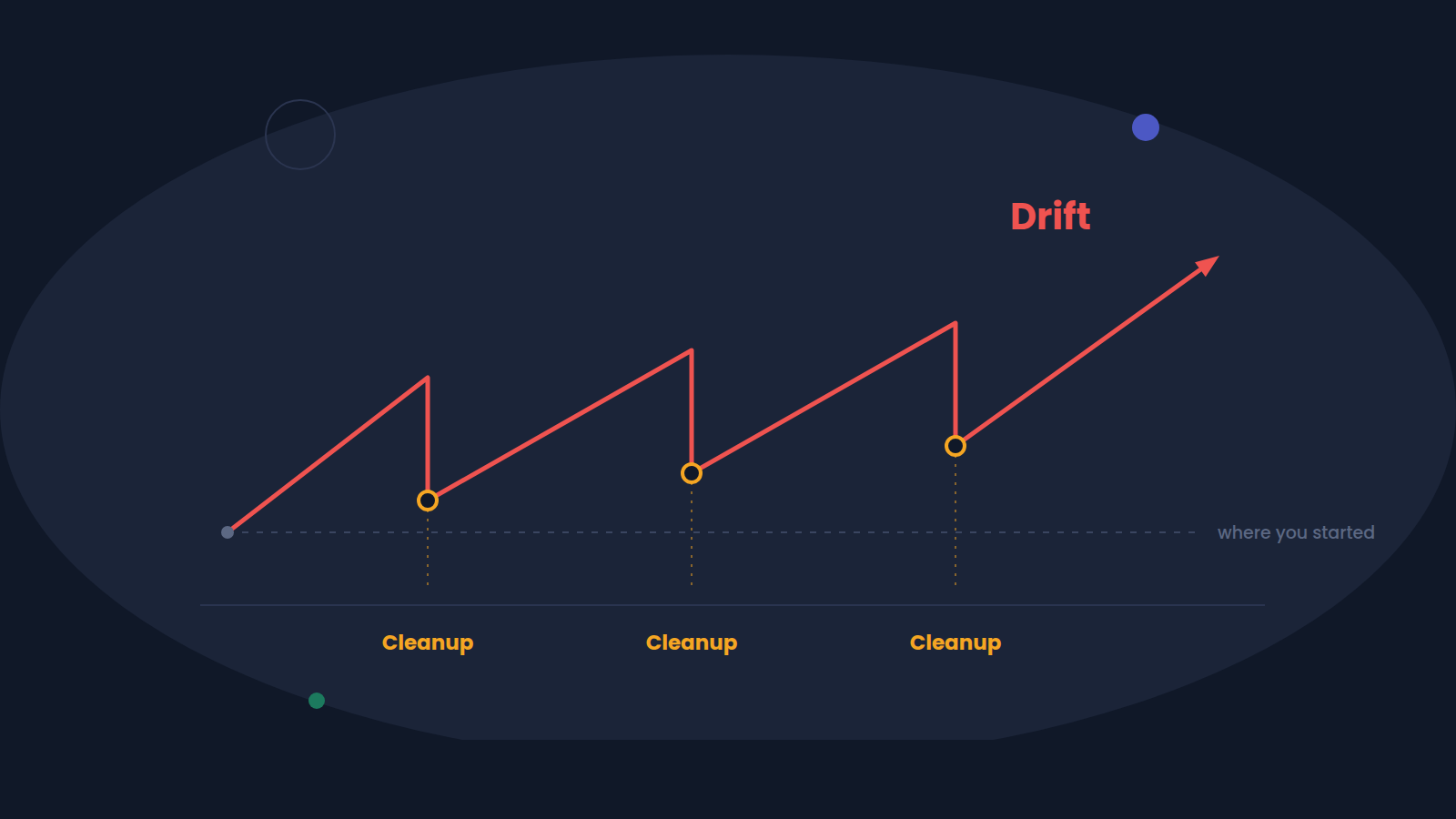
Every cleanup project in a grown Jira instance solves a problem that comes back, because cleanup happens on a date and drift happens every day. Why the justification, not the deleting, is the hard part, and why the day a new Cloud instance goes live is the only moment that breaks the cycle.
2026-09-21