

AI Agents in Jira: What Changes for Audit Readiness
 Maria Reisinger·2026-10-26·5 min read
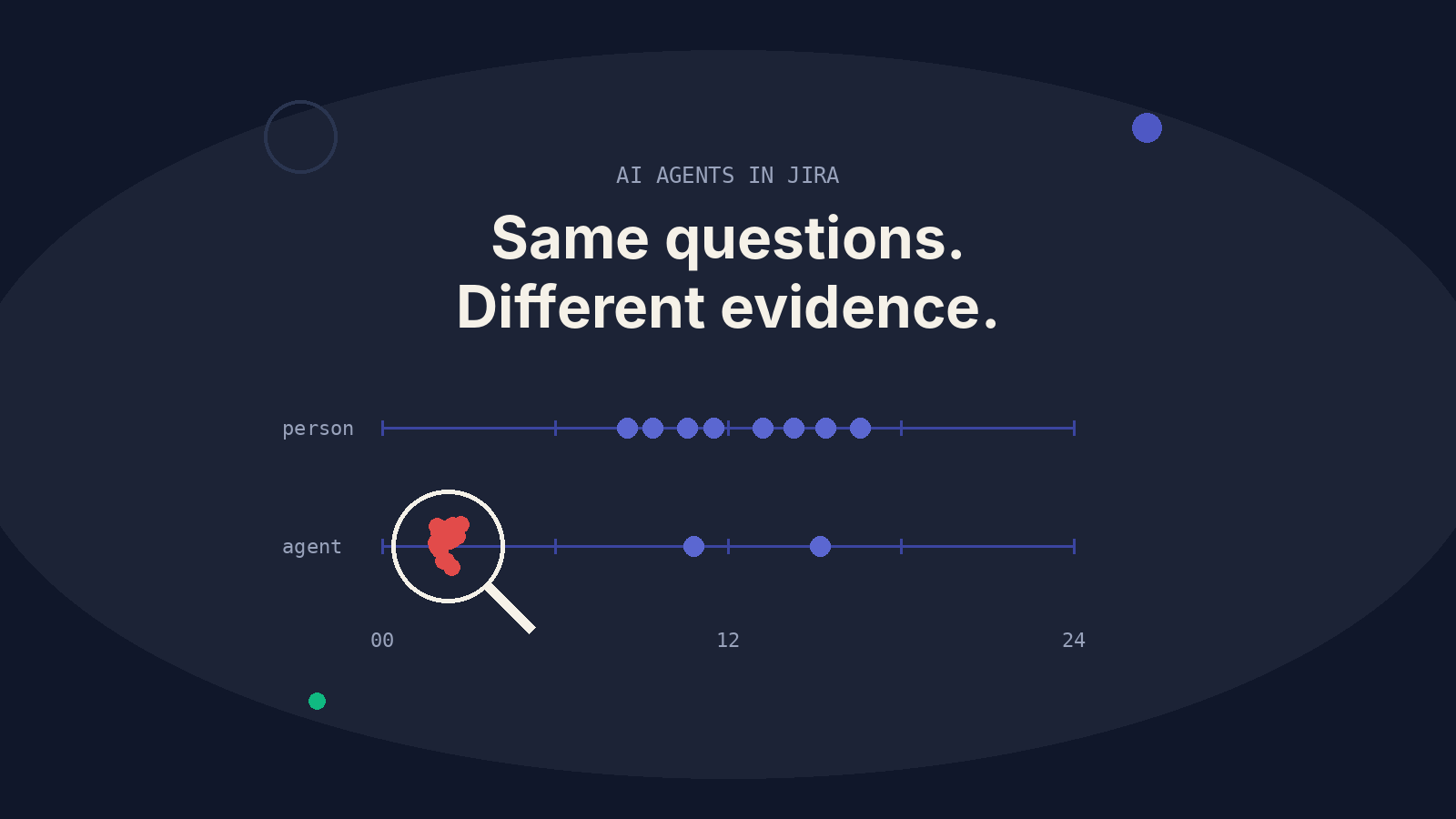
At Team '26 Europe, Atlassian made one thing very clear: AI agents in Jira are becoming part of everyday work. Rovo and other coding and service agents pick up work items, change fields, move statuses and close work. Atlassian also announced features to make that work easier to trace, such as agent sessions that link agent runs back to Jira work items.
For anyone responsible for Jira audit readiness, that raises an obvious question: do AI agents need new audit questions? Not really. The questions stay the same. What changes is the pattern in which work shows up in your Jira history.
Audit questions for AI agents stay the same
A reviewer will not judge an agent by a completely new rulebook. The questions are familiar: Who did it? On whose authority? Can you show it? For teams preparing a DORA or NIS2 review, these questions still land in access control, accountability and change management.
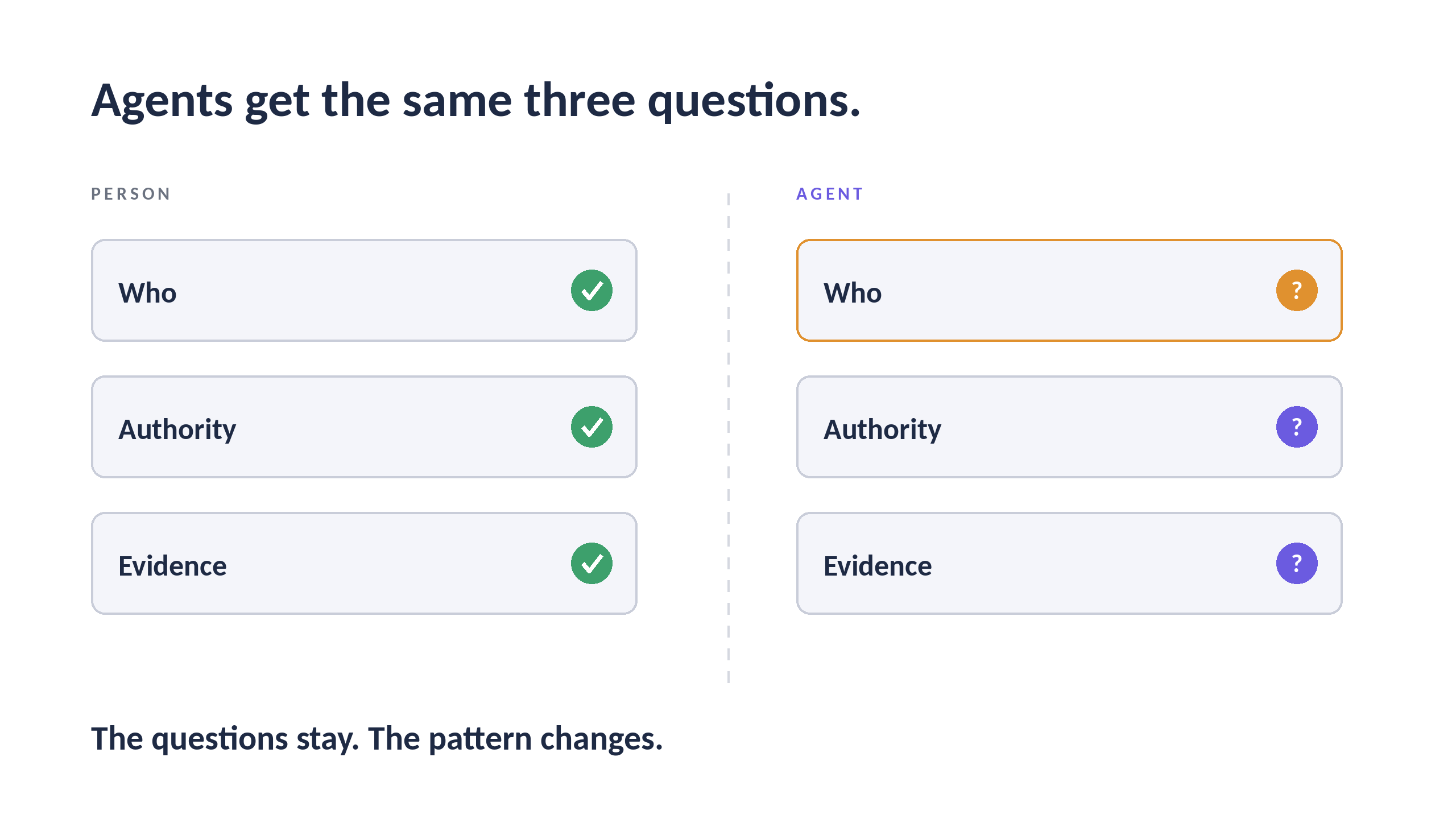
Illustration, not product data.
The difference is rarely in a single entry of the Jira audit trail. It is in how many entries together form a pattern.
AI agents change the pattern in the Jira history
A person does not work like a process that simply keeps running. Status changes are spread over the day, there are pauses and comments, work gets interrupted, picked up again and sometimes checked by a second person. An AI agent does not have to follow any of these rhythms. It can change many work items within seconds, work at night, close a whole batch at once or repeat the same action again and again.
That is not automatically a control problem, but it changes the signature of the work. A single status change may say very little. A hundred status changes within a few minutes, all outside working hours and all by the same actor, tell a different story. The name in the Jira history no longer answers the whole question. The pattern around it becomes relevant.
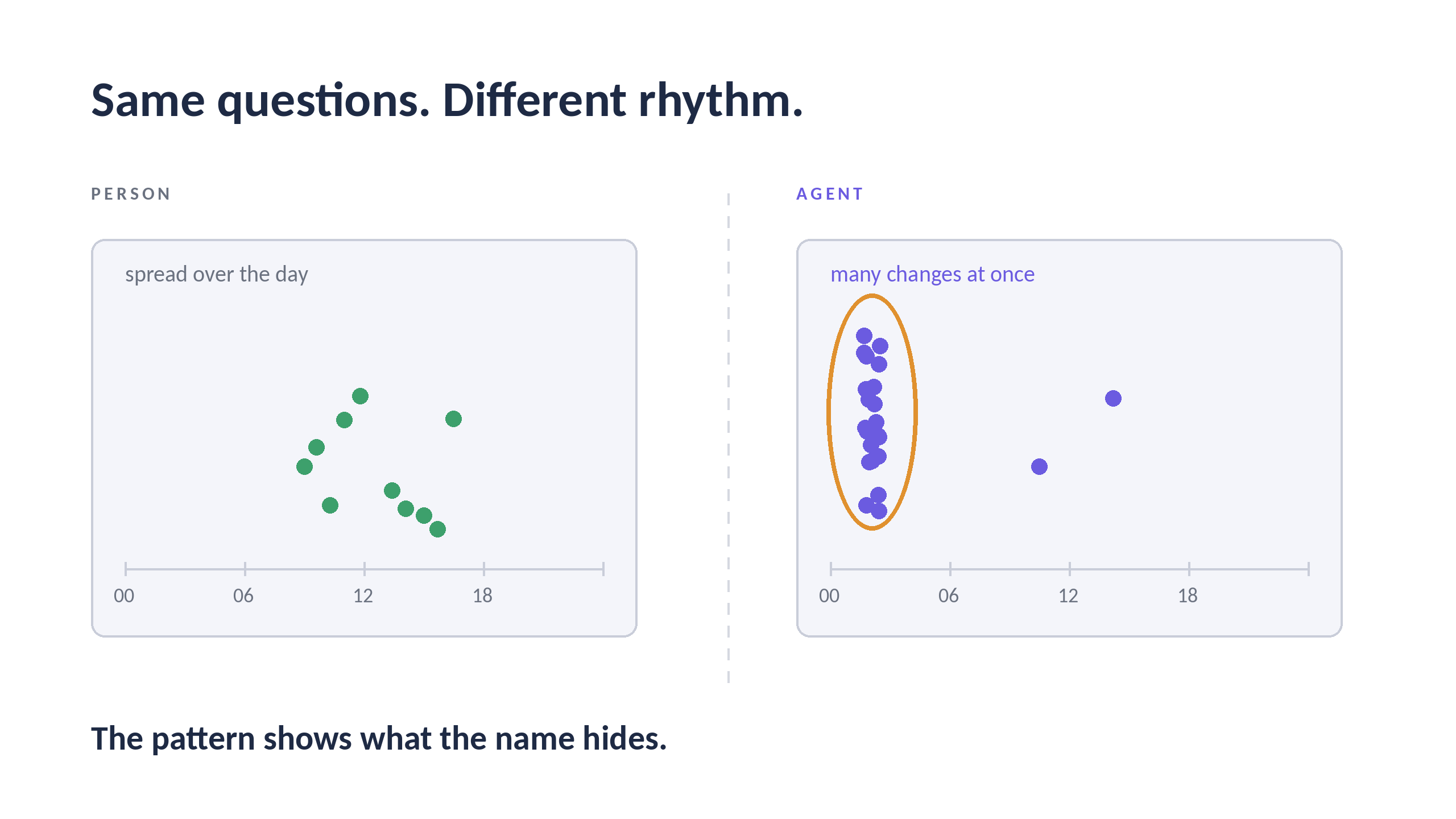
Illustration, not product data.
Where MetaFrazo looks in your Jira history
This is where looking at history over time becomes useful. MetaFrazo records your Jira events from the day it is installed and turns them into views across projects and time. Instead of reading entries one by one, you can see how the work behaves. Several of these patterns matter more once AI agents join the workflow:
Speed. Which work items moved through many statuses within a short time?
Timing. When do status changes happen? Is there activity outside working hours, and does that change over time?
Volume. When were many work items closed at once? Batch Close Detection makes these clusters visible.
Missing review signals. Are there closures without any comment, work created and closed by the same actor, or direct jumps from open to done? These combinations are not proof of a problem. They show where a closer look may make sense.
New actors. New Actor Burst Detection and Permission Drift Score by Actor show when new accounts suddenly become active or gain reach across projects.
Configuration. The Configuration Change Event Audit Log shows who changed workflows, fields and other settings, and when.
The speed and timing views are included in every edition. Review signals, Batch Close Detection and the new actor views are part of Audit Trail and Compliance Analytics.
What AI agents in Jira change for audits
The goal is not to review every agent action by hand. Quite the opposite: the more work AI agents take on, the less sense it makes to search through single Jira entries for anything unusual. The more useful question is which activity differs from the pattern you would expect. That is where a review can start.
This distinction matters. An unusual cluster is not yet a control failure. A missing comment is not yet a breach. A status change at night is not yet proof of missing authorization. But signals like these can show where the real audit question begins.
What MetaFrazo does not do
MetaFrazo cannot look back before it was installed. Recording starts on that day, so the earlier it runs, the more history is available for comparison. And MetaFrazo does not decide whether a control is effective. That judgment stays with your compliance function and your auditor.
What MetaFrazo does is reduce the search space. Instead of asking what happened in Jira over the last twelve months, you can ask a sharper question: where did the pattern change?
Three steps to prepare for an audit with AI agents in Jira
Look beyond the name. Who made a change still matters, but timing, speed and clustering can matter just as much.
Compare before and after. When AI agents start working in a Jira project, compare the speed, volume and timing of status changes with the months before.
Define the boundary. Which work may an agent close on its own? Which changes need a person to review them? And where does that review need to be on record?
AI agents do not change the questions of an audit. They change the shape of the evidence used to answer them. That is why Jira audit readiness now means looking not only at single entries, but at the pattern they form together.
You can find MetaFrazo on the Atlassian Marketplace as Audit Trail and Compliance Analytics for Jira.
Sources
Atlassian, "The Atlassian platform is for multiplayer human-agent work", Atlassian blog, 2026-10-06.
Atlassian, Founder Keynote, Team '26 Europe livestream, 2026-10-07.
Rate this post
Related articles
Jira Audit Readiness: Where Do You Stand Before Anyone Asks?
Jira audit readiness for change approvals: why a complete change history is not enough, and how patterns show where to look before the audit.
2026-10-12
What DORA Really Asks of Your Approvals
DORA no longer asks whether an approval control exists, but whether it still works across your whole Jira over time. That drift never shows in a single ticket. Here is where Article 9 fits, and why the evidence you need is already in your Jira history.
2026-08-19
Atlassian Guard Premium DLP: Why Data Protection Alone Isn't the Whole Compliance Story
Atlassian Guard Premium brings Data Loss Prevention to Jira and Confluence, a real step forward for content security. But DLP doesn't automatically cover governance. Protecting sensitive data is one question. Proving your controls still work over time is another. Here's why that distinction matters for NIS2, DORA and ISO 27001.
2026-07-22