
Jira Audit Readiness: Where Do You Stand Before Anyone Asks?
 Maria Reisinger·2026-10-12·4 min read
Eight weeks before the audit, management asks the head of IT governance a simple question about change approvals in Jira: Are we in good shape?
Illustrative scenario.
She could tell you what happened to any single work item. Jira recorded all of it. But the question isn't about one work item. It's about all of them, and that is where audit readiness really gets tested.
The auditor checks samples. You answer for every Jira project.
An audit tests selected cases. For those cases there is a clean answer: the change history of every work item lives in Jira, and it can be searched and exported.
Whoever owns the control needs a different answer. Not only "Is this case in order?" but "Where should we look more closely?" Because she doesn't pick the sample. The auditor does.
A complete Jira change history is not the same as a clear one
An export lists every change, line by line. At tens of thousands of lines the material is complete, but the real question stays open: Where do I start?
And the answer isn't the same everywhere. Over the years, workflows in different projects drift apart. A team adds a shortcut for urgent fixes, and it stays. Permissions granted for a migration are never taken back. Nobody decided any of this. It is how an organization's use of Jira evolves when many teams adapt it to their own work. For her, it means nine projects can look unremarkable and the tenth not.
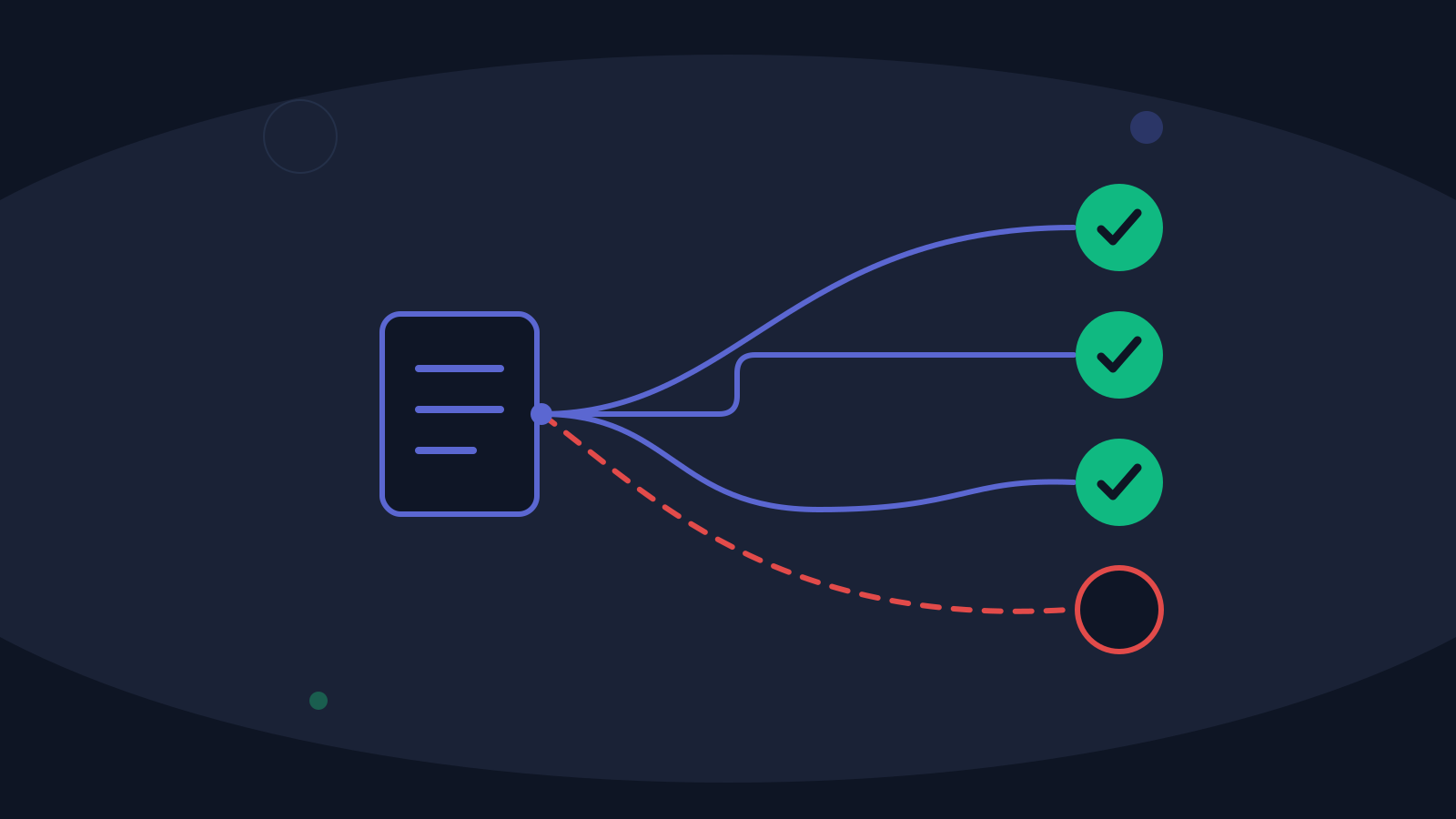
The export shows what happened. It doesn't show where to look more closely.
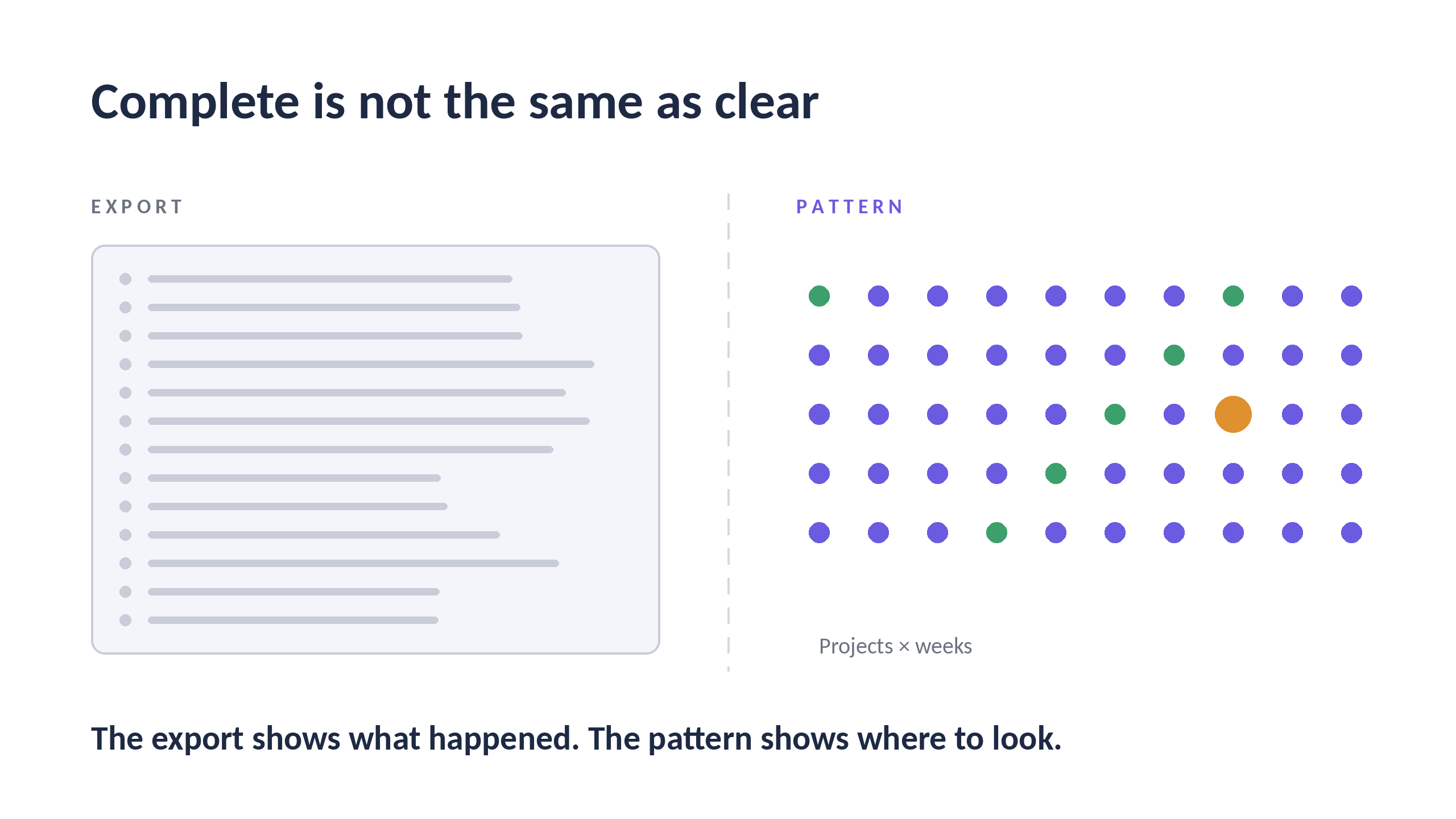
Illustration, not product data.
Which signals to check before a Jira audit
For teams preparing a DORA or NIS2 review, certain questions keep coming back: around changes, approvals, permissions and traceability. From these you can derive signals that are visible in the data:
- Work items that move from a status before work began straight to done
- Work items opened and closed by the same person
- Work items closed without a single comment
- Changes to workflows and permissions, and the people who made them
These signals don't show whether an approval took place. They show where it's worth looking.
From a pattern to a fix in one project
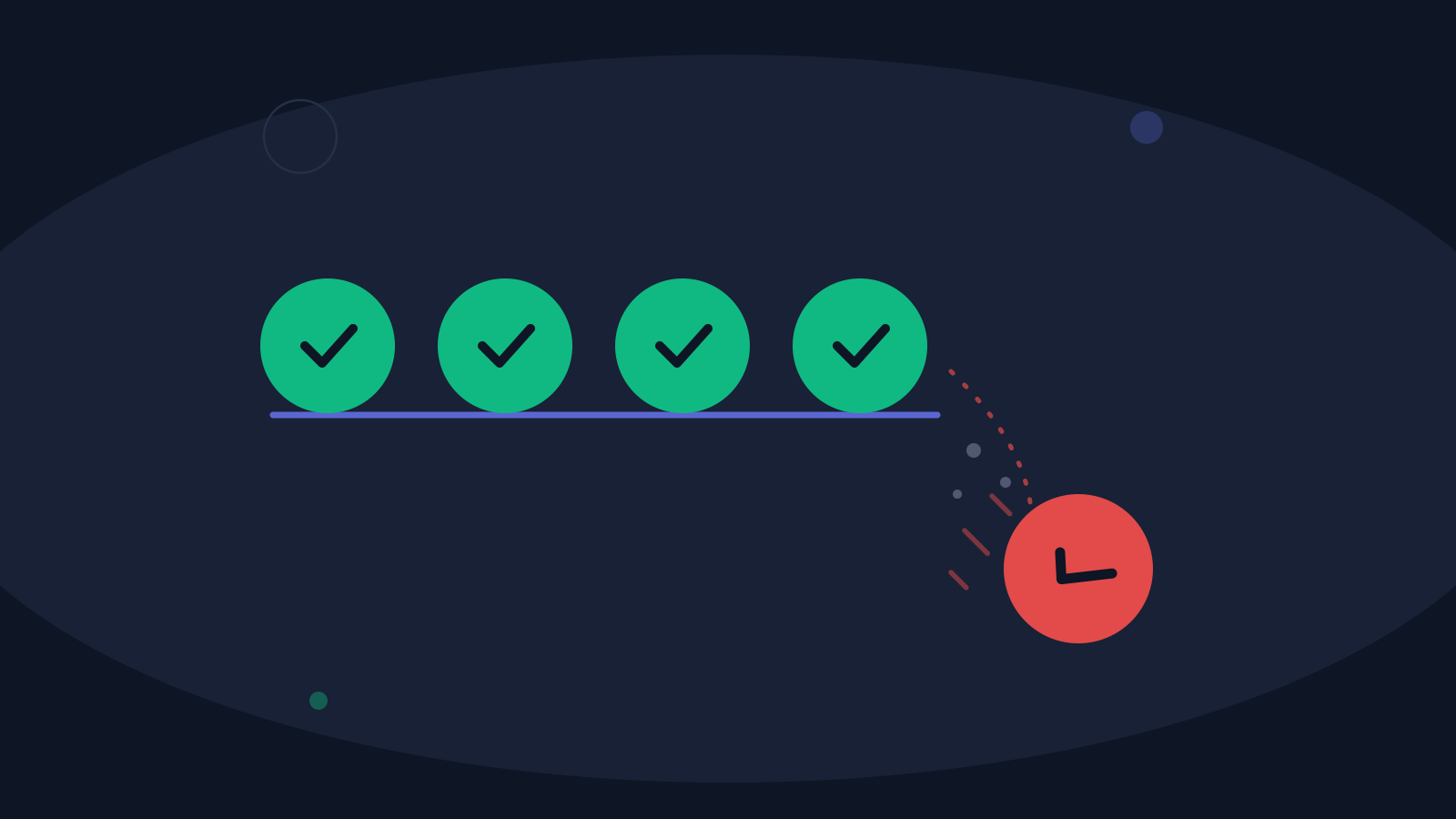
Take the first signal, the bypass. A bypass is our own measurement, not a finding: a work item that moves from a status before work began straight into a done status.
She doesn't look at every bypass one by one. First she looks at the pattern over the past months.
Most bypasses are spread evenly and explainable, typically emergency fixes. In one project, though, they cluster, starting with a workflow change in the spring. Now she opens the cases by hand. The cause: a shortcut meant only for a migration that was never removed. She has it removed.
Out of thousands of events, a handful of places remain where the question really mattered: Where do we stand here?
Whether the control was effective overall is still the auditor's call. But she now knows where she stands, before anyone asks.
Jira records the events. MetaFrazo, installed on her site since last year, makes them queryable for patterns across time and projects.
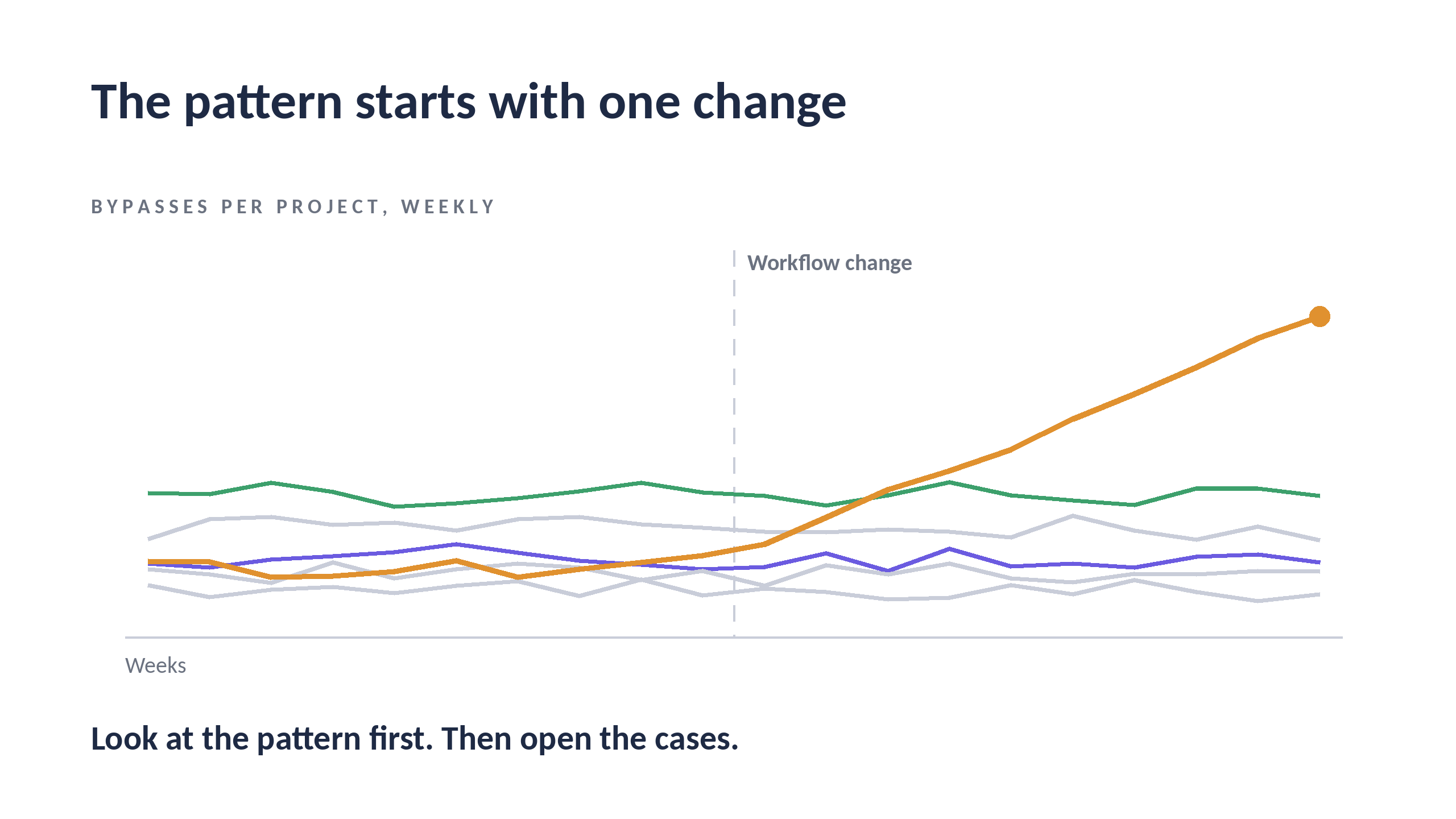
Illustration, not product data.
Audit readiness takes time to build
There is an honest limit here: MetaFrazo records from the day it is installed. What happened before isn't part of the analysis. And patterns only become meaningful once a few weeks of data sit behind them.
So this isn't an exercise for the week before the audit. It's a habit. The earlier it starts, the more the patterns say.
The answer to management
Back to the opening question: Where do we stand before anyone asks?
She can now say more than that Jira recorded everything. She can show where the control looked unremarkable, where patterns deserved attention, and what she checked and changed as a result.
Not "I think so." An answer grounded in her own data.
Bypass signals are included in every edition of both analytics apps. Signals for work items opened and closed by the same person, or closed without a comment, are part of Audit Trail and Compliance Analytics for Jira.
See Audit Trail and Compliance Analytics for Jira on the Atlassian Marketplace
Rate this post
Related articles
What DORA Really Asks of Your Approvals
DORA no longer asks whether an approval control exists, but whether it still works across your whole Jira over time. That drift never shows in a single ticket. Here is where Article 9 fits, and why the evidence you need is already in your Jira history.
2026-08-19

Atlassian Guard Premium DLP: Why Data Protection Alone Isn't the Whole Compliance Story
Atlassian Guard Premium brings Data Loss Prevention to Jira and Confluence, a real step forward for content security. But DLP doesn't automatically cover governance. Protecting sensitive data is one question. Proving your controls still work over time is another. Here's why that distinction matters for NIS2, DORA and ISO 27001.
2026-07-22
NIS2 in Europe: One Directive, Many National Routes to Proof
NIS2 sets one EU framework, but each member state decides how compliance is proven. Greece, Germany, Austria, Spain, Belgium and Ireland compared.
2026-10-06