

Your Jira Reports Are Built on a Dropdown Nobody Remembers
 Maria Reisinger·2026-07-13·3 min read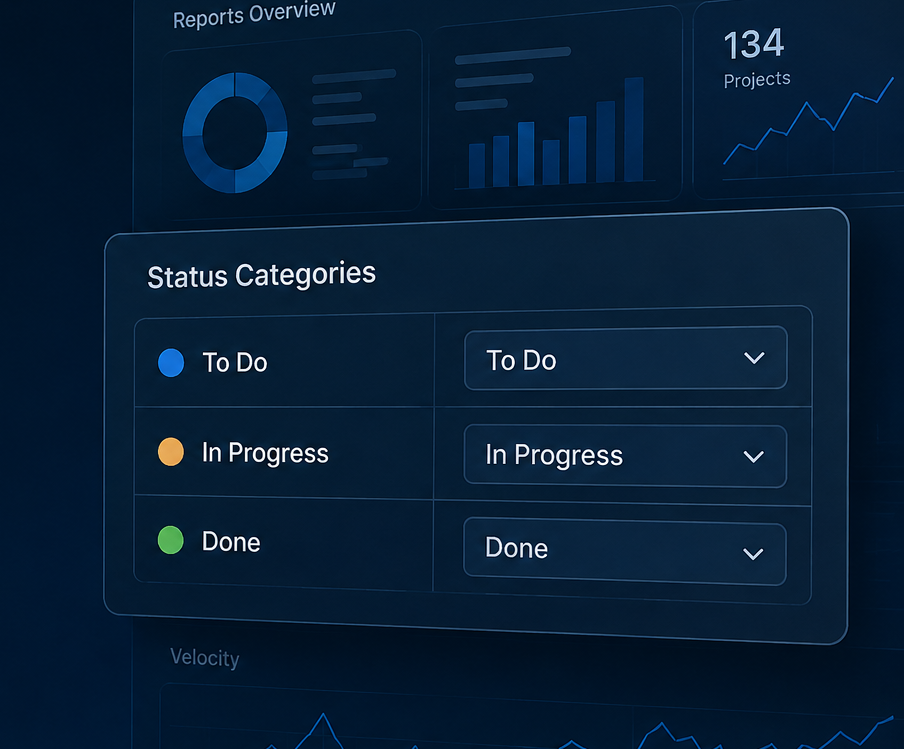
Your Jira Reports Are Built on a Dropdown Nobody Remembers
Somewhere in your Jira instance there is a setting that shapes every single report your management gets to see. It was set months ago, maybe years. Nobody remembers who did it. It was a dropdown with three options, and it took about two seconds.
The three drawers
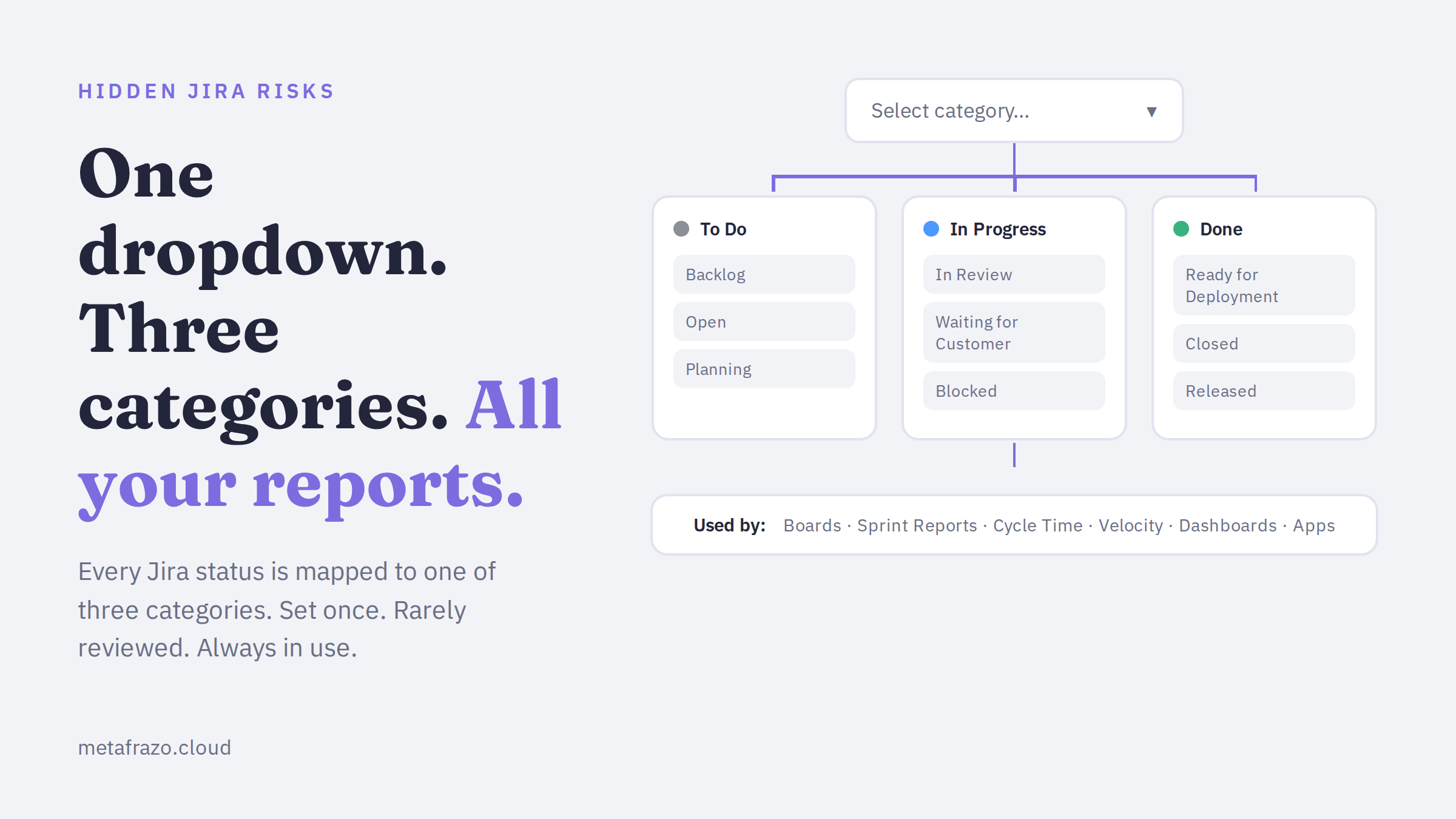
Under the hood, Jira only knows three categories for any status: To Do, In Progress, and Done. Grey, blue, green. Every status a team creates has to go into one of these drawers. "Waiting for Customer", "In Review", "Ready for Deployment", "Blocked": all of them land in one of the three categories at the moment they are created, selected via a dropdown, usually by whoever needs the status right then.
The problem is not the simplification. The problem is what happens afterwards: nothing. Boards, sprint reports, cycle time calculations, every "how much is currently in progress?" calculates with the drawers, not with the statuses themselves. The mapping is the foundation of the entire reporting world. And it never gets looked at again.
How the mapping drifts away from reality
A few patterns I keep seeing:
→ A support team creates "Waiting for Customer" and sorts it under In Progress. Sounds logical, the issue is open after all. Cycle time now includes weeks in which nobody works.
→ A delivery team maps "Ready for Deployment" to Done. The sprint report turns green. Nothing has been delivered.
→ Someone creates a new status under time pressure and accepts whatever category the dropdown suggests. Not wrong thinking. No thinking at all.
Each individual case is harmless. Taken together, it means: green, blue and grey mean something different in every project. Two projects with identical numbers can describe completely different realities.
Why nobody notices
The report calculates correctly. The numbers are right, in the formal sense. What is not right is the assumption underneath, and that assumption appears in no report. It lives in the configuration, where only admins can go and where even admins rarely look. A dashboard can look very right for a very long time while the mapping underneath slowly drifts away.
This is the core of the question that occupies me in all of this: can you trust your Jira? Not because someone is cheating. But because the reports are built on a silent assumption that nobody checks anymore.
What you can do about it
The first step costs nothing: go through the mappings once. Every status, every category, project by project. (I will publish a step-by-step guide for this in the Atlassian Community later this week.)
The second step is the harder one, because a manual review is valid for exactly one day. New projects, new teams, new statuses, and the drift starts all over again. That is why we made Status Category Drift one of the three checks in the MetaFrazo Intelligence Feed, included in the Pro Standard plan: a continuous view of whether your mappings still match how your teams actually work, instead of an annual archaeology exercise.
https://marketplace.atlassian.com/vendors/684225822/metafrazo
But regardless of the tooling: when did anyone at your organization last look at that dropdown?
Rate this post
Related articles
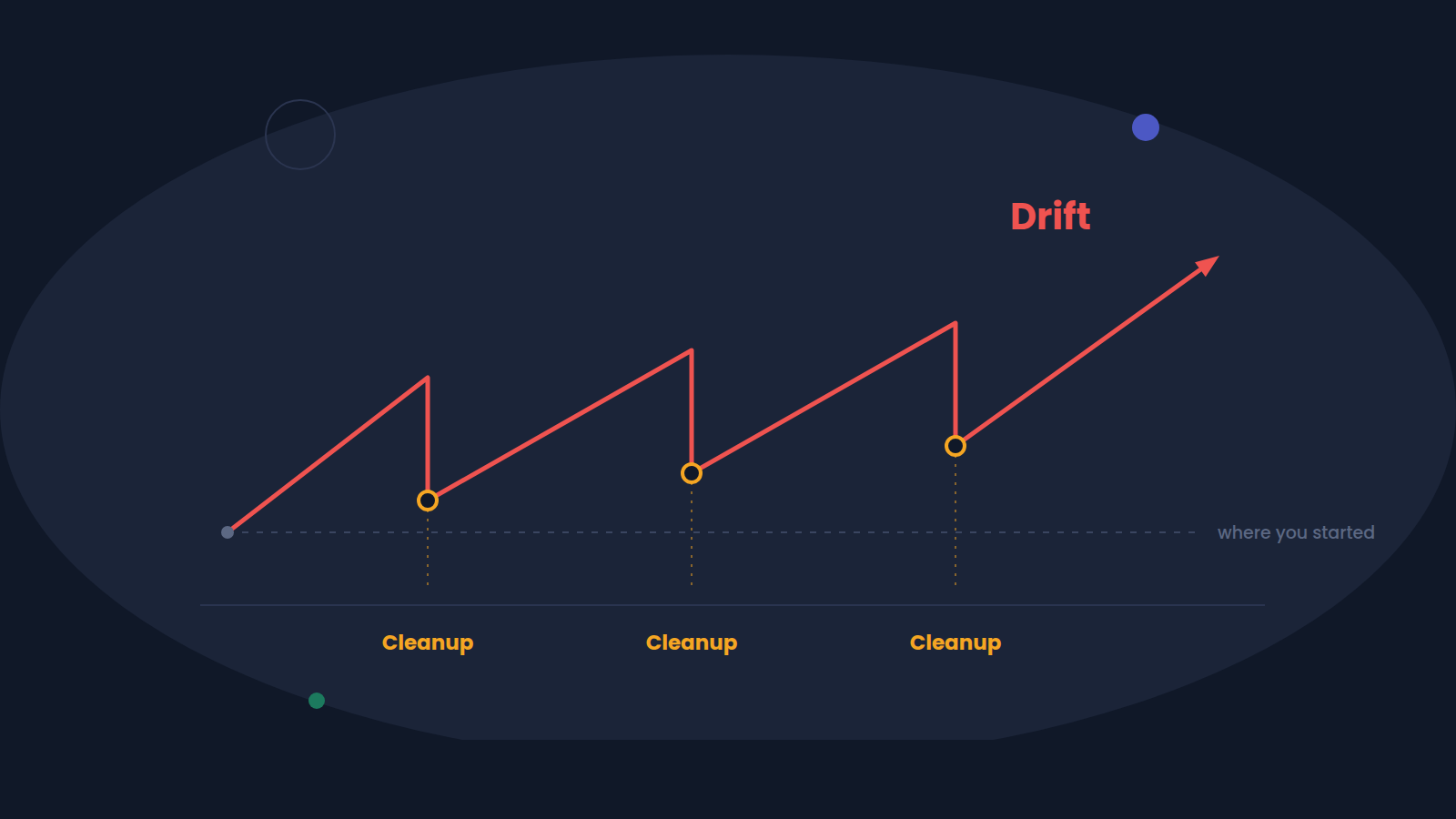
Cleanup is an event. Drift is a condition.
Every cleanup project in a grown Jira instance solves a problem that comes back, because cleanup happens on a date and drift happens every day. Why the justification, not the deleting, is the hard part, and why the day a new Cloud instance goes live is the only moment that breaks the cycle.
2026-09-21
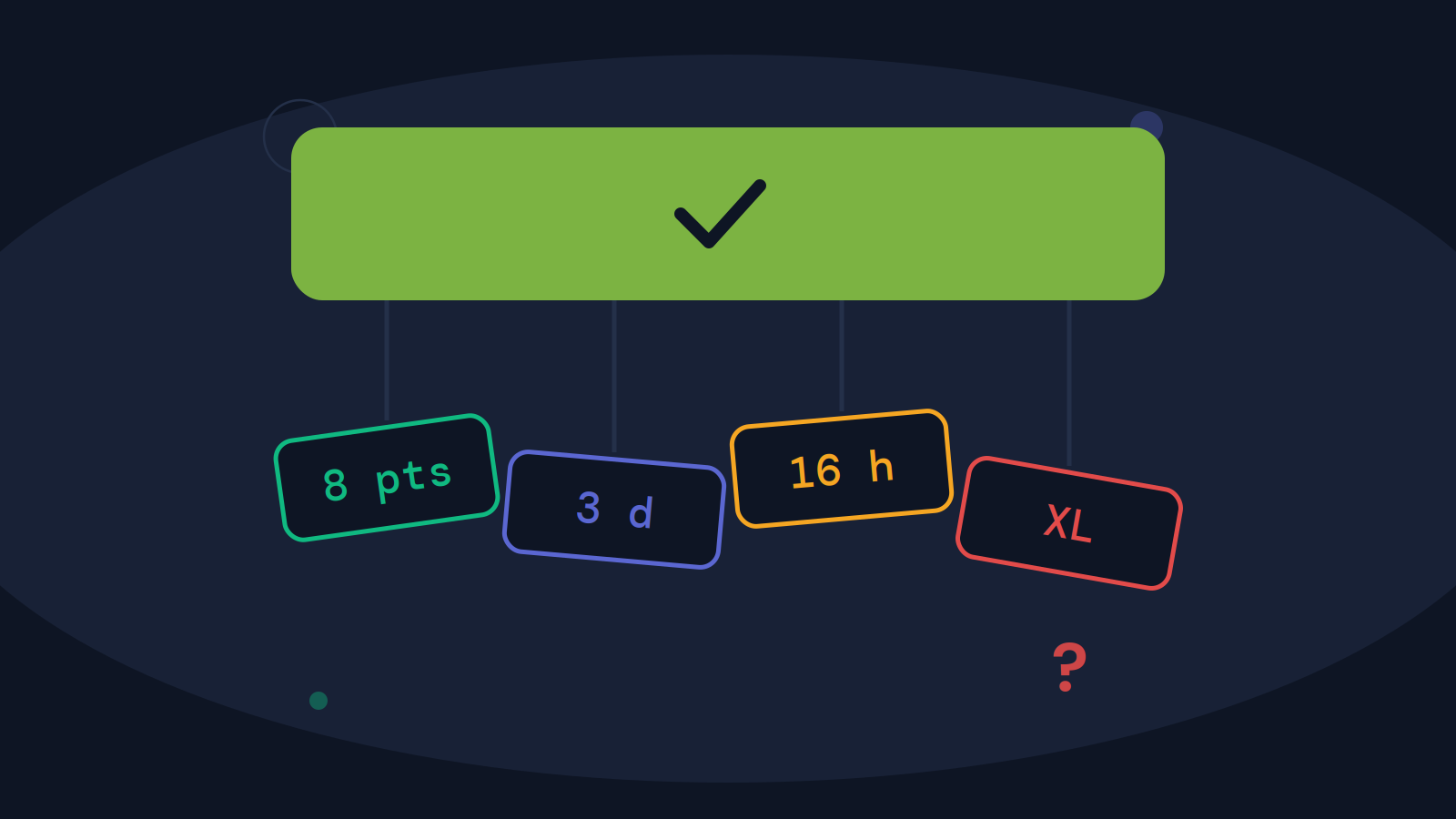
The color decides, not the number
Four teams estimate in four different units, and one dashboard turns them into a single colour. When the bar is green, nobody asks what the number underneath actually means. The gap this opens up only matters when someone asks what a decision was based on. And that is where the configuration and the event history start to disagree.
2026-08-17
Atlassian Analytics and Jira Governance: Who Owns the Query?
Every audit asks the same Jira questions, and nobody owns the query. What Atlassian Analytics offers, who it is built for, and where MetaFrazo adds to it.
2026-09-28