
5 Questions with Marie-Kathrin Organiszak (Uelzener)
 Maria Reisinger·2026-10-08·5 min read
About Marie-Kathrin
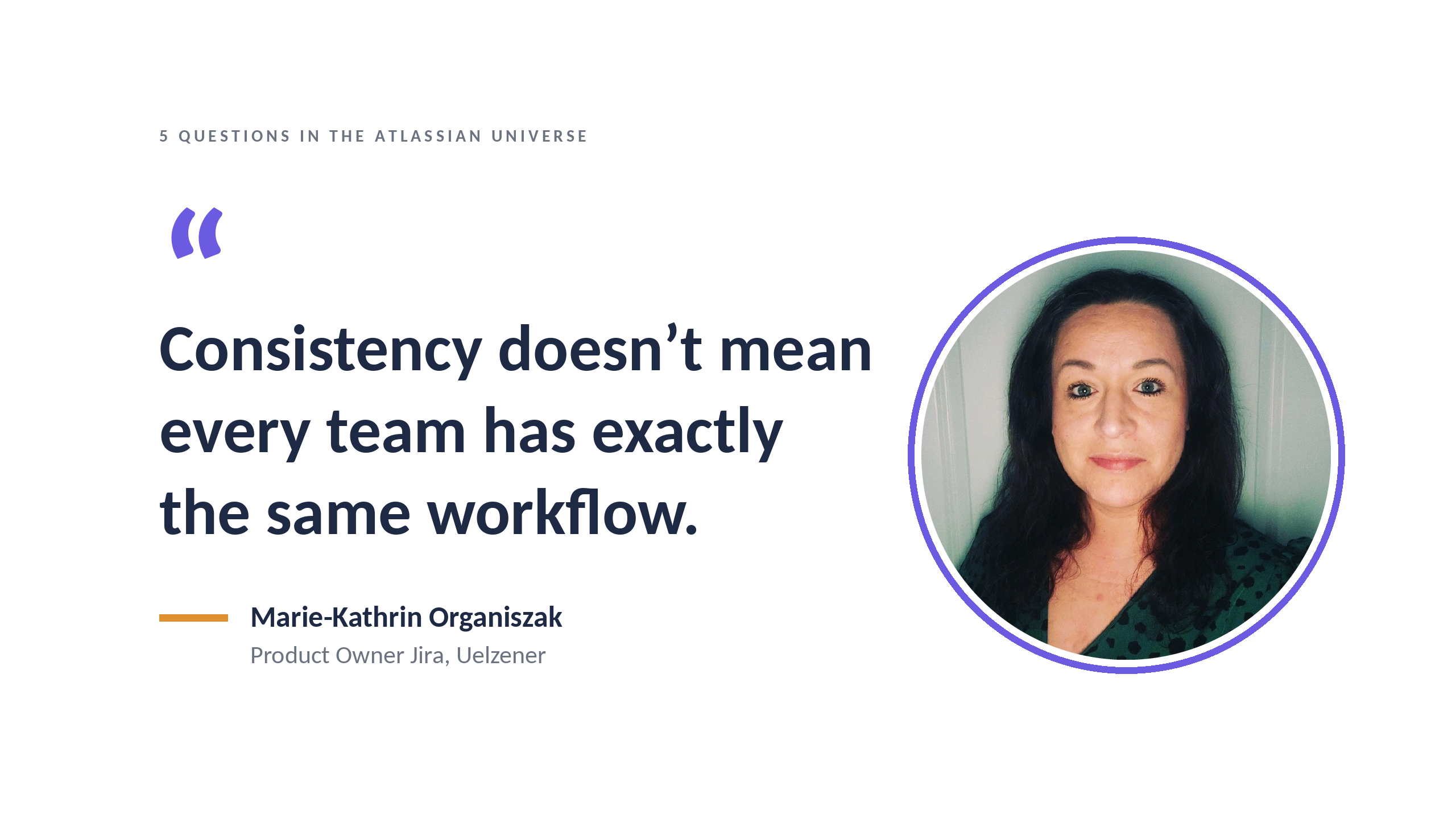
Marie-Kathrin Organiszak · Product Owner Jira and Assistant, IT & Business Service, Uelzener · Uelzen, Germany
"Consistency doesn't mean every team has exactly the same workflow."
Marie-Kathrin has been with Uelzener, a specialist insurer for animals, since 2006. As Product Owner for Jira, she takes in change requests across Jira, Jira Service Management and Jira Product Discovery, questions them, prioritizes them and configures the solutions herself. She accompanied Uelzener's move to Atlassian Cloud.
Areas of expertise: Jira · Jira Service Management · Jira Product Discovery · Confluence · Requirements Management · Process Improvement
1. As Product Owner, you look after Jira, Jira Service Management and Confluence at Uelzener. What does that role mean in your day to day work, and how has it changed since the move to the cloud?
In my role, I take in change requests, question them and prioritize them. What matters to me is not simply building the requested feature, but understanding the process behind it: Where does it get stuck? What do the teams really need? And can something be simplified? Together with the people involved, I then develop a suitable solution, which I also configure myself.
Moving to the cloud typically shifts the focus. Alongside business requirements, the continuous evolution of the platform, changes from the vendor and the right governance play a bigger role. The core of my work stays the same, though: mediating between what teams need and a solution that holds up.
2. Before the migration, the question was whether an insurer with its data protection and BaFin requirements could move to the cloud at all. Which questions did you have to answer back then, and which of them are still with you in daily operations?
It wasn't only the basic question of whether an insurer can use cloud services. Among other things, we had to look at data protection, data location and processing on our behalf. On top of that came BaFin and outsourcing requirements, risk assessment, information security and access rights, as well as availability and recovery. Contract questions, subcontractors and audit rights mattered too.
In daily operations, permissions and privileged access in particular stay with us. AI is increasingly part of it as well: we have to clarify where AI features are used, which data they may process, and how access, data protection and the handling of AI results are governed. In a regulated environment especially, that belongs in ongoing governance.
3. At Uelzener, not only IT works in Jira, but also HR and Facility. How do you keep workflows, statuses and fields consistent across such different teams?
Consistency doesn't mean every team has exactly the same workflow. What matters is creating shared guardrails while respecting genuine business differences.
So I start by looking at the process and the requirements: What should a status say? What purpose does a field serve? Where is complexity creeping in that nobody needs? On that basis, we develop a solution with the people involved that is easy to follow and actually helps the teams. That way we avoid translating requirements one to one into ever more fields or special cases.
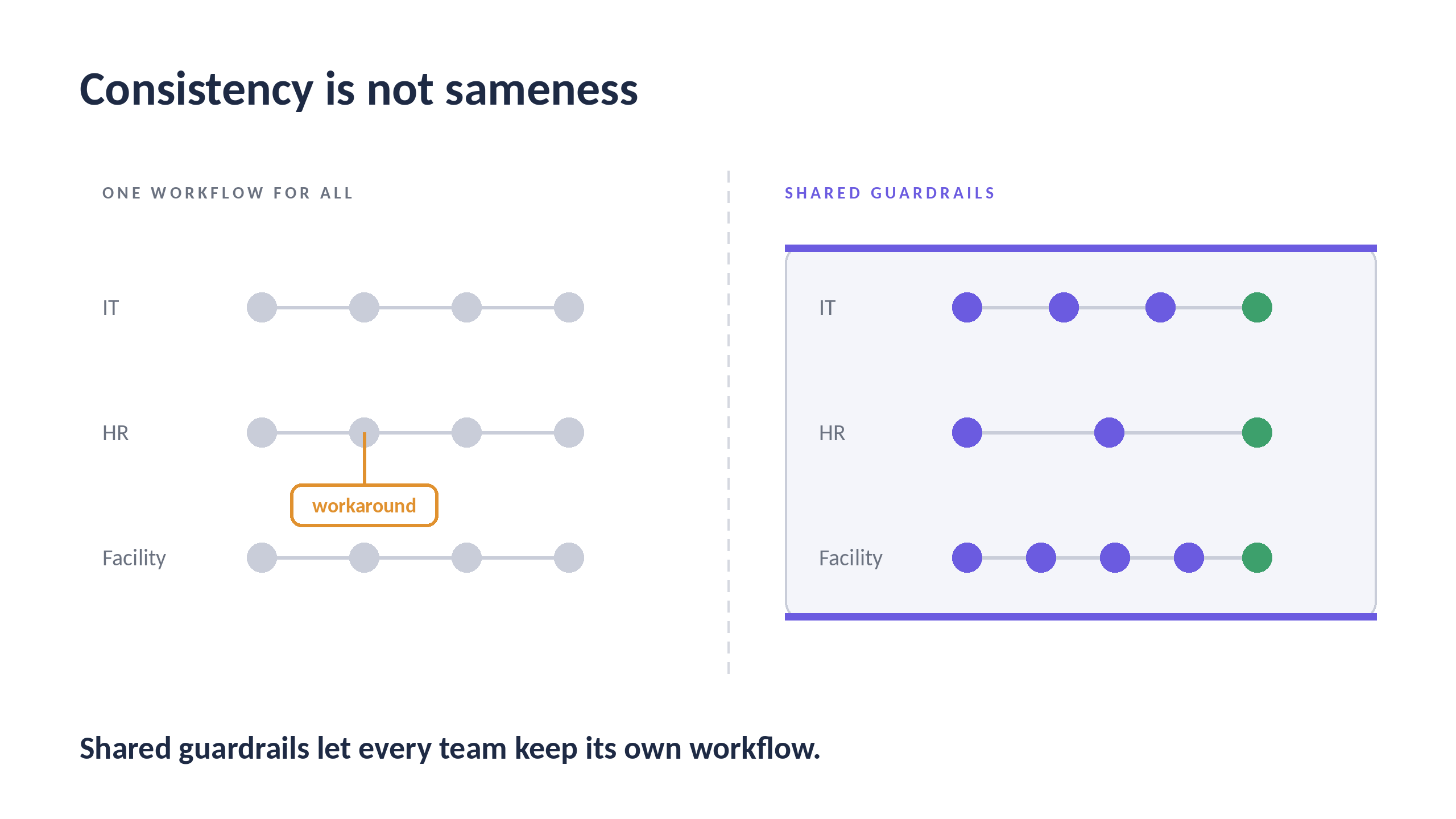
Illustration, not product data.
4. When internal audit or an auditor asks "Who changed this, when, and why?", how well can your Jira environment answer that today, and where does it get difficult?
For us, traceability starts before implementation: every change request is written up as a requirement. That shows what was supposed to change and why. Together with the change history in Jira, meaning who made a change and when, it forms a traceable chain from requirement to implementation.
What matters is that requirement and implementation are cleanly linked. Then, in an audit, we can show not only what changed, but also the business reason behind it.
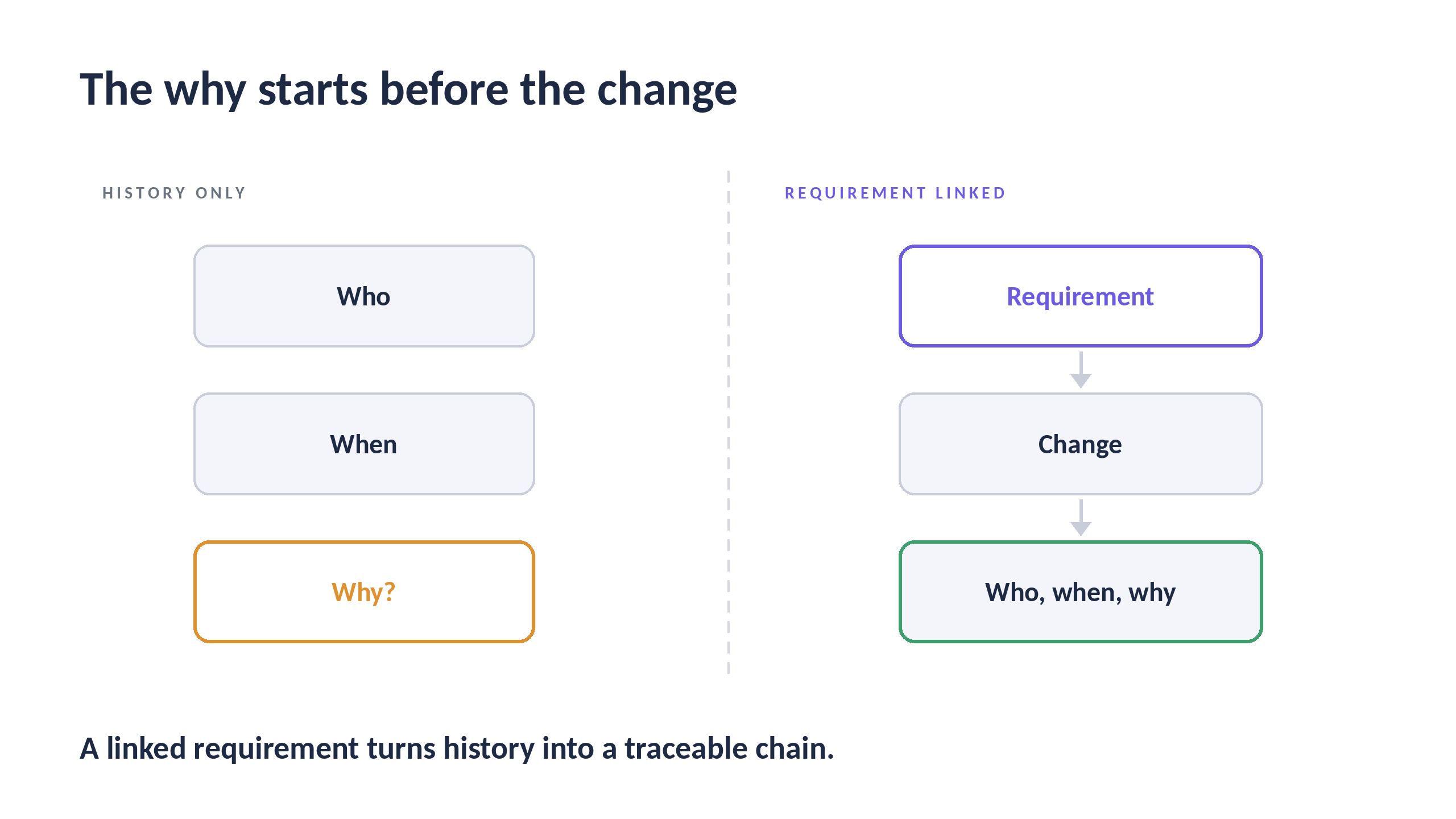
Illustration, not product data.
5. What advice would you give an insurer that still has the move to the cloud ahead of it?
Clarify early what data protection, BaFin, internal audit and information security expect, and document how those expectations will be met in operations. Clean up data, apps and configurations before the migration instead of simply carrying existing complexity along.
Run test migrations with representative data and typical workflows as well. That way, problems with data, permissions, apps and integrations surface early and can be fixed. Involve the business teams and clarify responsibilities. A migration is not only about technology, it is also about ways of working and accountability. So plan from the start how governance, controls and permissions should work once you are live.
Five lessons from Marie-Kathrin Organiszak
-
Understand the process before you change the tool. The requested feature is rarely the real need.
-
The questions don't end with the migration. Permissions, privileged access and now AI stay on the agenda in daily operations.
-
Consistency means shared guardrails, not identical workflows. Every status and every field needs a clear purpose.
-
The "why" starts before the change. A requirement linked to its implementation turns a change history into a traceable chain.
-
Don't migrate your complexity. Clean up first, test with representative data and plan governance for the day you go live.
Thank You
Our sincere thanks to Marie-Kathrin Organiszak for sharing such a clear and practical view of what it takes to run Jira in a regulated environment.
Her idea that traceability begins with the requirement, not with the log, is one many readers will take straight back to their own Jira.
We truly appreciate your time and your openness.
About this series
5 Questions in the Atlassian Universe is an interview series by MetaFrazo featuring experienced practitioners from across the Atlassian ecosystem.
Each conversation explores practical lessons, real challenges and proven approaches to managing Atlassian products at scale.
Because the best ideas don't come from tools alone. They come from the people who use them every day.
About MetaFrazo
MetaFrazo helps organizations understand what is changing, what matters and where operational risks are emerging inside Jira.
By transforming Jira event history into operational intelligence, teams gain the visibility needed to improve governance, reduce configuration drift and make better decisions across time.
www.metafrazo.cloud · Available on the Atlassian Marketplace
See you in the next edition of 5 Questions in the Atlassian Universe.
Interview conducted in writing, 2026-10-01.
Rate this post
Related articles
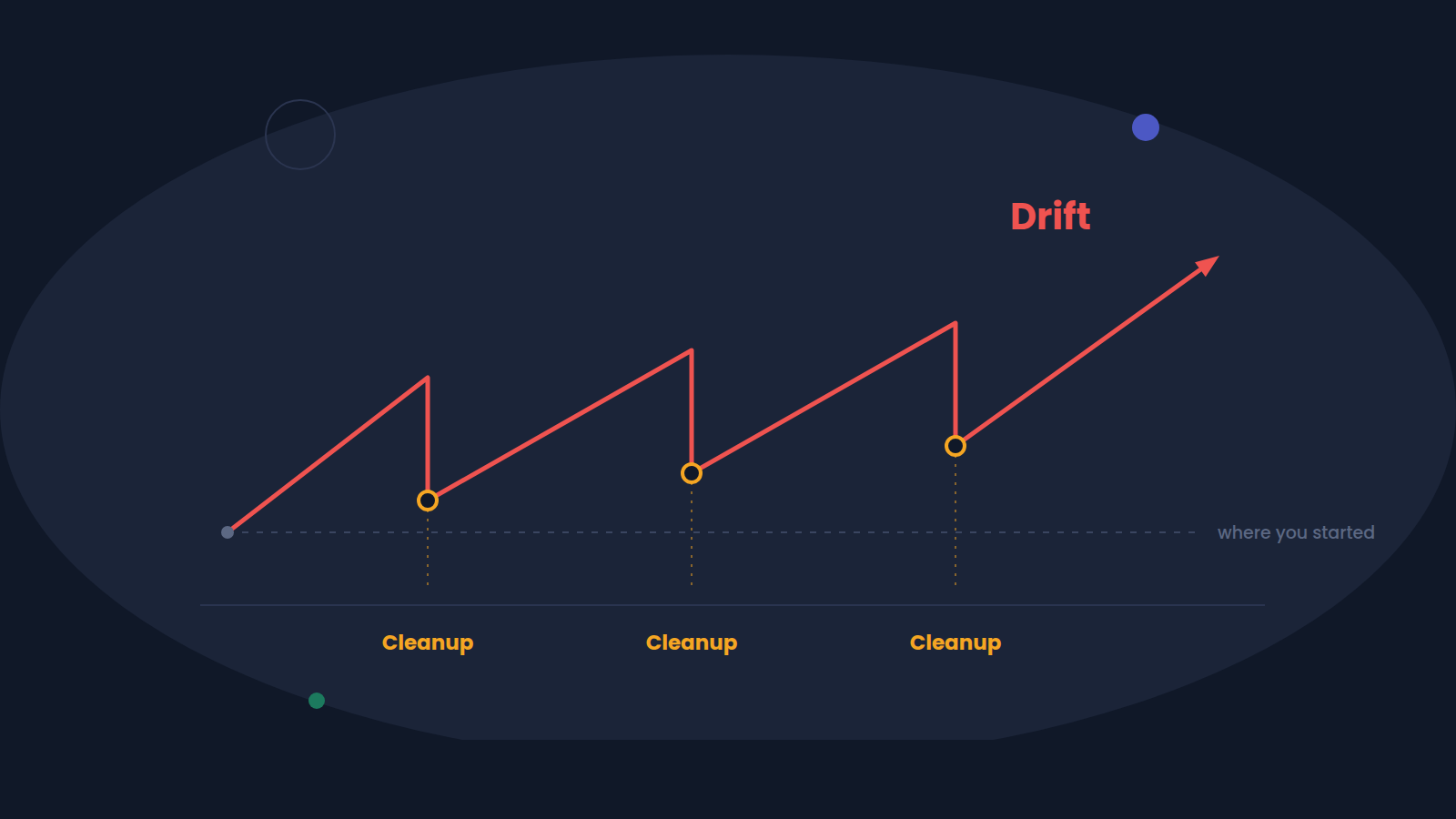
Cleanup is an event. Drift is a condition.
Every cleanup project in a grown Jira instance solves a problem that comes back, because cleanup happens on a date and drift happens every day. Why the justification, not the deleting, is the hard part, and why the day a new Cloud instance goes live is the only moment that breaks the cycle.
2026-09-21
5 Questions in the Atlassian Universe with Martin Runge
Martin Runge, Head of Atlassian Practice at XALT, on how long Jira actually remembers who changed what, why backup is more the customer's job than most Cloud teams realize, and what separates a logged change from an authorized one.
2026-09-10
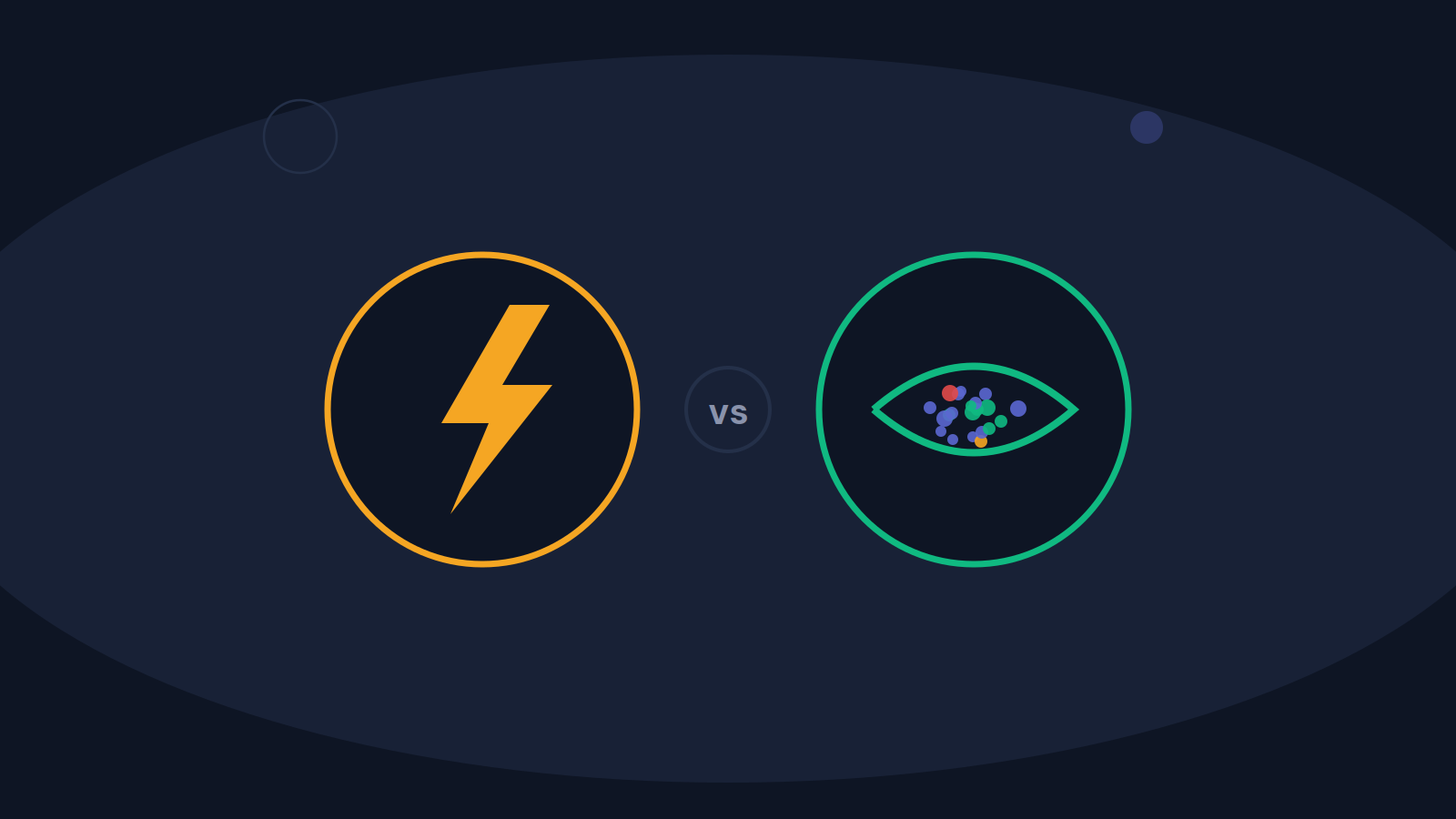
The AI Shift in Jira: We May Be Asking the Wrong Question
AI is reshaping the Atlassian ecosystem quickly, and every new announcement raises the same worry about whether AI will replace Marketplace apps. This article argues that the more useful question is which problems AI can genuinely solve and which ones still need specialized products. AI is becoming the interface and it makes automation far easier, yet automation only answers what should happen next, while intelligence answers what is actually happening across hundreds of projects. Because operational risk builds up from many small, reasonable changes over time, the lasting advantage belongs to products that give organizations visibility into what their configuration is quietly doing, not just tools that perform individual tasks faster.
2026-08-04